
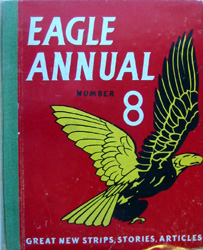
The Eagle
Life was different in the years immediately after World War II. Rationing was the norm, and you had to wait for everything. Although we had a daily newspaper, my brother and I were not allowed to have a regular subscription to a comic, such as ' Beano' or ' Dandy', and had to buy copies with our extremely limited pocket money, if we could not beg, borrow or....
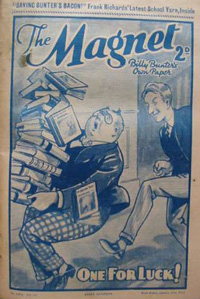
Even so, there was a corner shop nearby by which sold old copies of comics, and it was there that I found I preferred to read titles like 'Adventure', 'Hotspur', 'Rover' and, my favourite, 'Wizard'.
So you can just imagine our amazement that we were actually allowed to subscribe to a new comic that hit the news stands in April 1950. As a comic it was perfect. We so looked forward to it that issue No. 6 was actually torn in half as my brother and I struggled to read it first. Although we saved each copy as it came, they eventually all disappeared, as such items do, which was a pity as they would be worth a small fortune today.