
De Havilland Mosquito – Warpaint Special No. 3
Aircraft have always fascinated me. When I was younger, one of my hobbies was radio-controlled cars. I always wanted to progress onto aircraft – but sadly never had the funds!
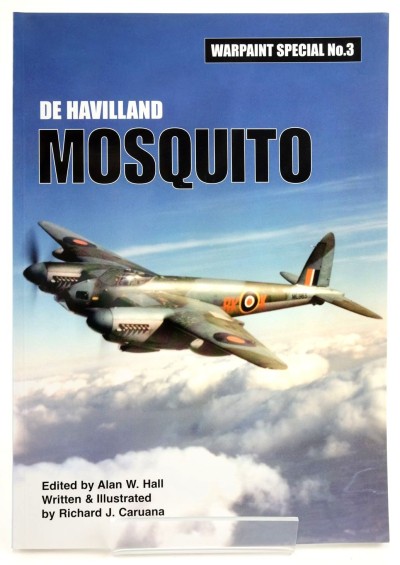
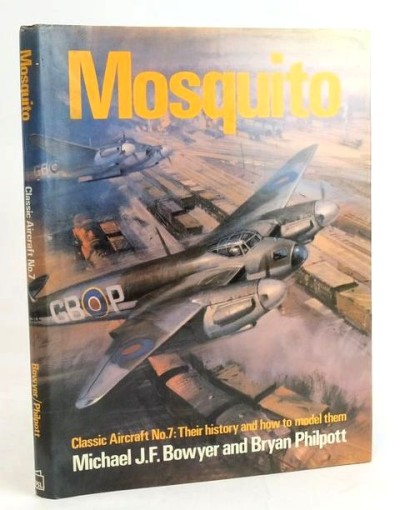
Over the last few years, I’ve played around with building my own drones (with limited success) and even building a radio-controlled hovercraft, but I’ve never lost my interest in aircraft. One of these days, I might just build a model aircraft and, if I did, it would probably be one of my all-time favourite aircraft – the De Havilland Mosquito.
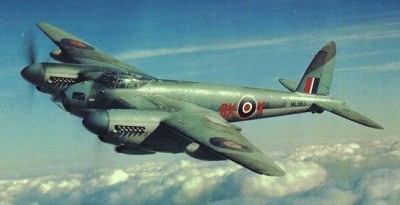
I really don’t know where my love of the Mosquito came from. Maybe it was the aircraft being featured in Herge’s Adventures of Tintin (The Red Sea Sharks?) or maybe one of the many books on aircraft I read as a child. Or maybe just its incredible story and legendary status.
A very brief history of the Mosquito… The development of the Mosquito started with some revolutionary thinking way back in 1936. The concept of the Mosquito was based on speed – lots of speed. So much so that initially it was designed as an unarmed bomber; its only defence was its ability to outrun any enemy interceptor!
It went on to be developed as a four cannon, four gun fighter bomber, an unarmed photo-reconnaissance version as well as a transport, trainer and target tug. In total, over 7,500 Mosquitos were built in Britain, Canada and Australia, with the last one built in 1950.
The Mosquito’s success probably comes from two main design choices. Firstly, it was powered by two of the legendary Rolls-Royce Merlin engines. These V-12, 27-litre monsters produced anything from 1,000 horsepower in their early guise, through to 1,800 horsepower at the end of World War 2.
It’s second and possibly most remarkable feature was its wooden construction. At a time when most aircraft were being built from aluminium, De Havilland built the Mosquito from wood! The result was a fast, light aircraft and utilised a workforce of carpenters who were not generally supporting the war effort. The aircraft was built from birch, spruce and balsa, along with heavy duty sections using ash and walnut. Photos of the wooden construction can be seen at the Military Aviation Museum, Virginia website.
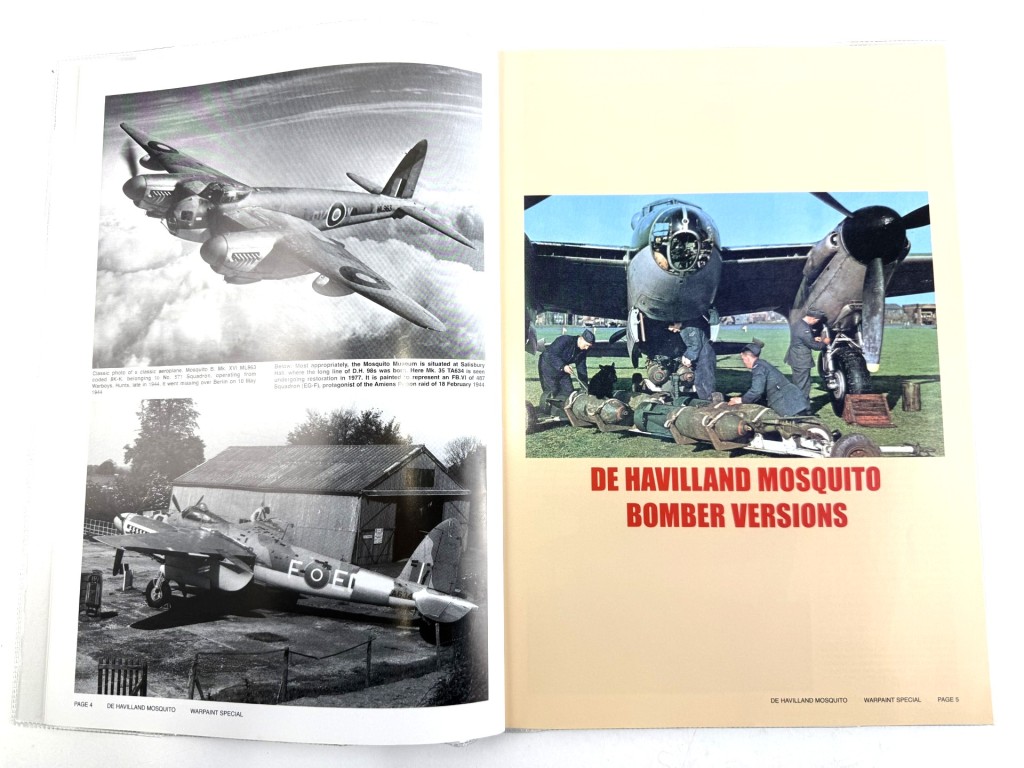
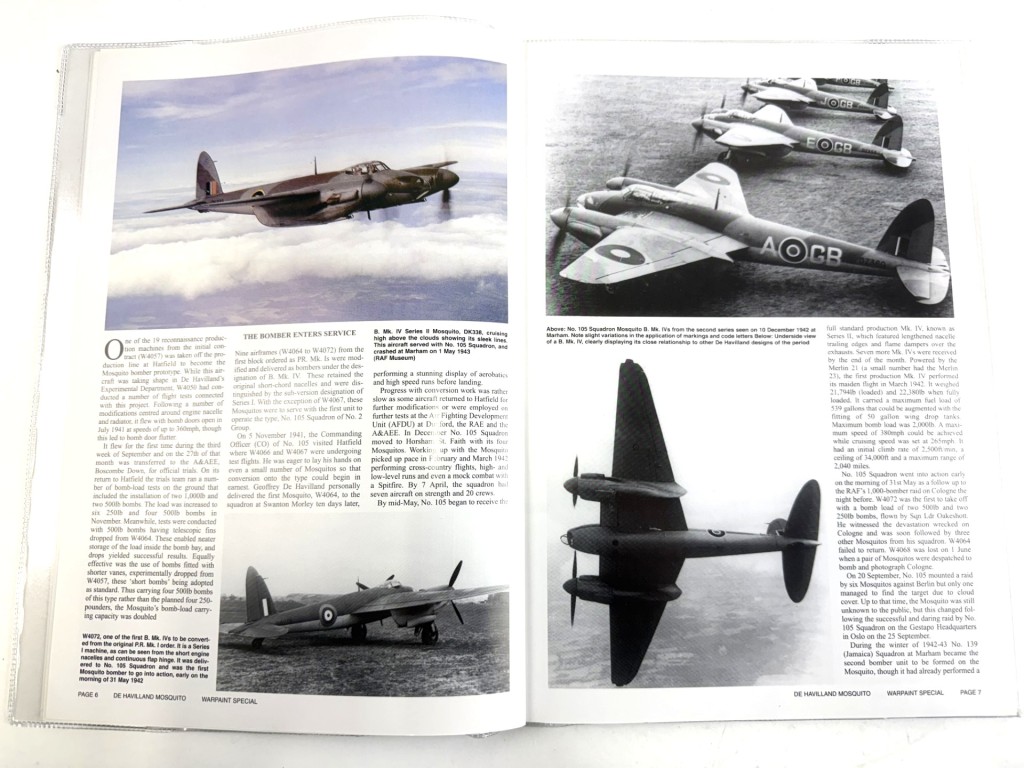
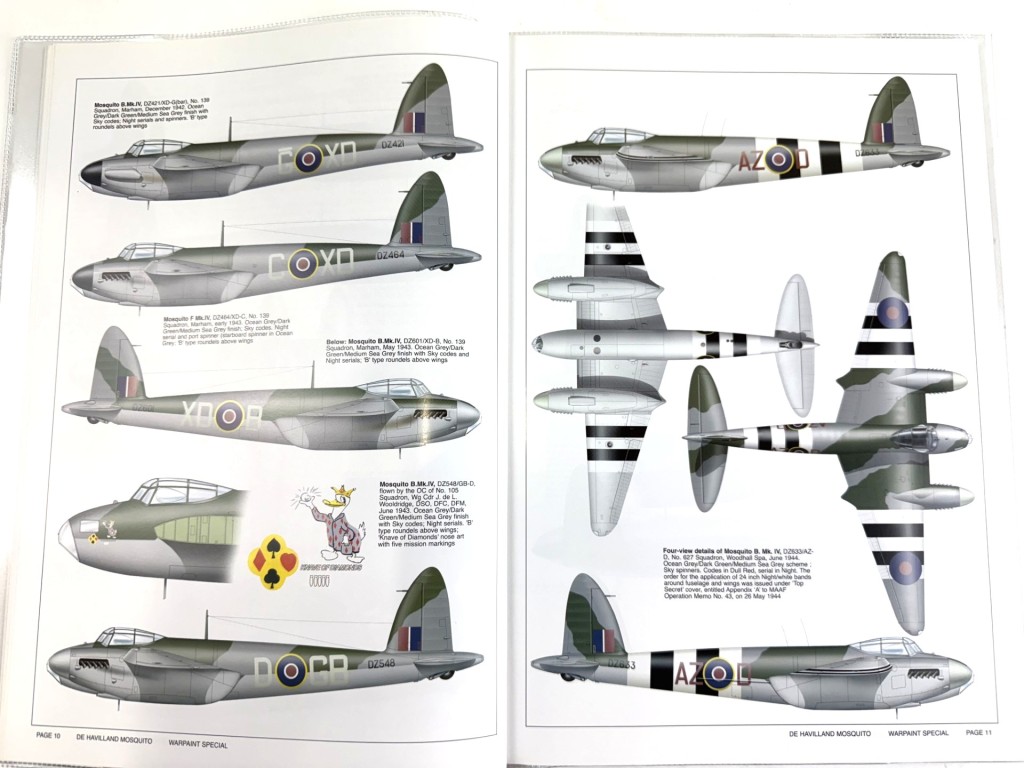
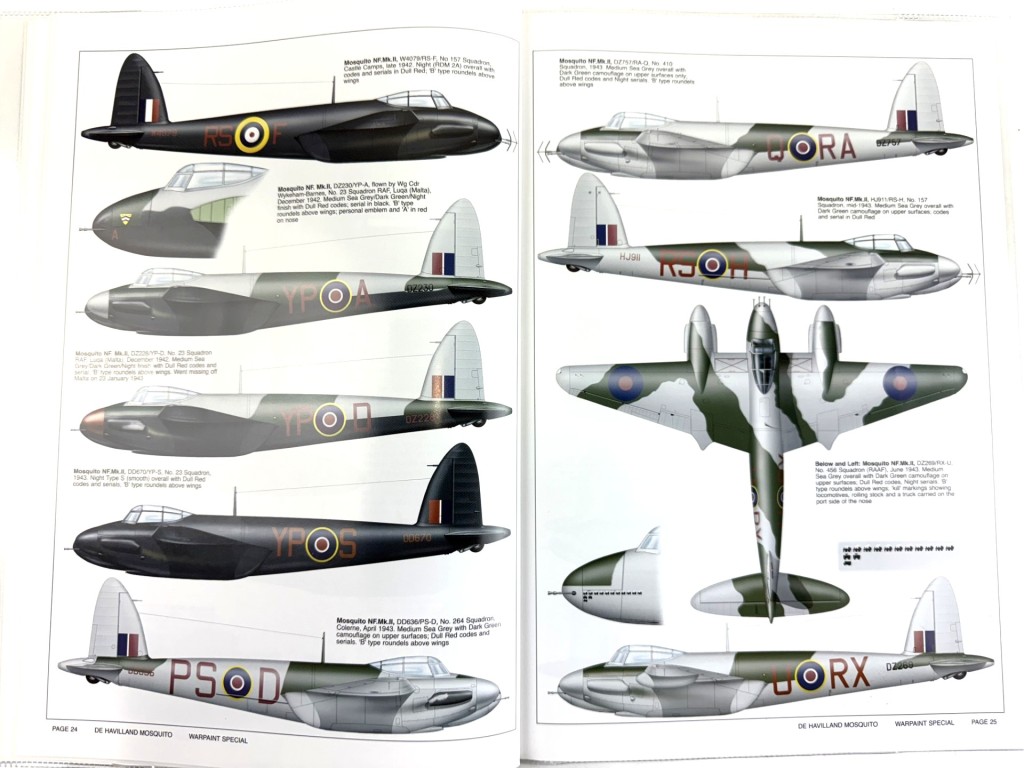
Stella and Rose’s Books have a large selection of aircraft and aviation books and, as I write this, we have six books in stock related to the Mosquito. They range from books dealing with Mosquito squadrons of World War 2, through to books on building model Mosquitos. The book I’ve specifically selected is the Warpaint Special No. 3.
As well as having an interesting history of the Mosquito’s development, it details the important variants and how they came into existence. But the main focus is the colour schemes of all the different squadrons, variants, roles, and even air forces! I had no idea that Mosquitos were acquired by the USA, Belgium, Burma, China, Czechoslovakia and even the Dominican Republic!
The first and only time I’ve seen a real Mosquito was at the Imperial War Museum at Duxford. They have TA719 which was built by De Havilland Hatfield as B.35. It was used in the movie 633 Squadron in 1963 but was belly damaged during landing in 1964. It was rebuilt from 1968 to 1973 and placed on display at Duxford in 1978. According to Wikipedia, around 30 Mosquitos survive today, with only five currently airworthy.
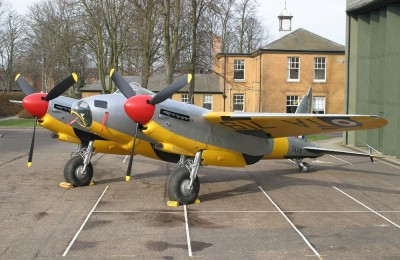
Maybe one of these days I’ll be able to see one of those five airworthy aircraft in flight. Certainly one of the items on my ‘to-do’ list is to visit the De Havilland museum in Hatfield. They appear to have at least three Mosquitos on display.
In the meantime, I might just have to build that Mosquito model… It seems that it’s possible to 3D print a Mosquito… now there’s an idea!
References:
https://en.wikipedia.org/wiki/De_Havilland_Mosquito
https://www.dehavillandmuseum.co.uk/
Contributed by Steve
(Published on 15th Mar 2025)