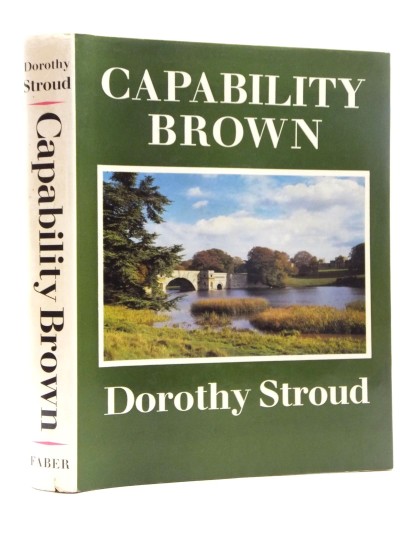
Capability Brown by Dorothy Stroud
As it was a lovely day we decided to visit a National Trust property. The one we chose was Croome Court in Worcestershire which consists of a mid-18th century Neo-Palladian mansion, RAF museum, a church, follies and landscaped gardens. As we entered the grounds, the first thing we noticed was how similar the grounds were to that of Chatsworth House in Derbyshire. We were later told that it was Capability Brown who had designed them both. Therefore, not knowing too much about Capability Brown I wondered if we had any books in our shop about him and came across this one, Capability Brown by Dorothy Stroud.
About The Author
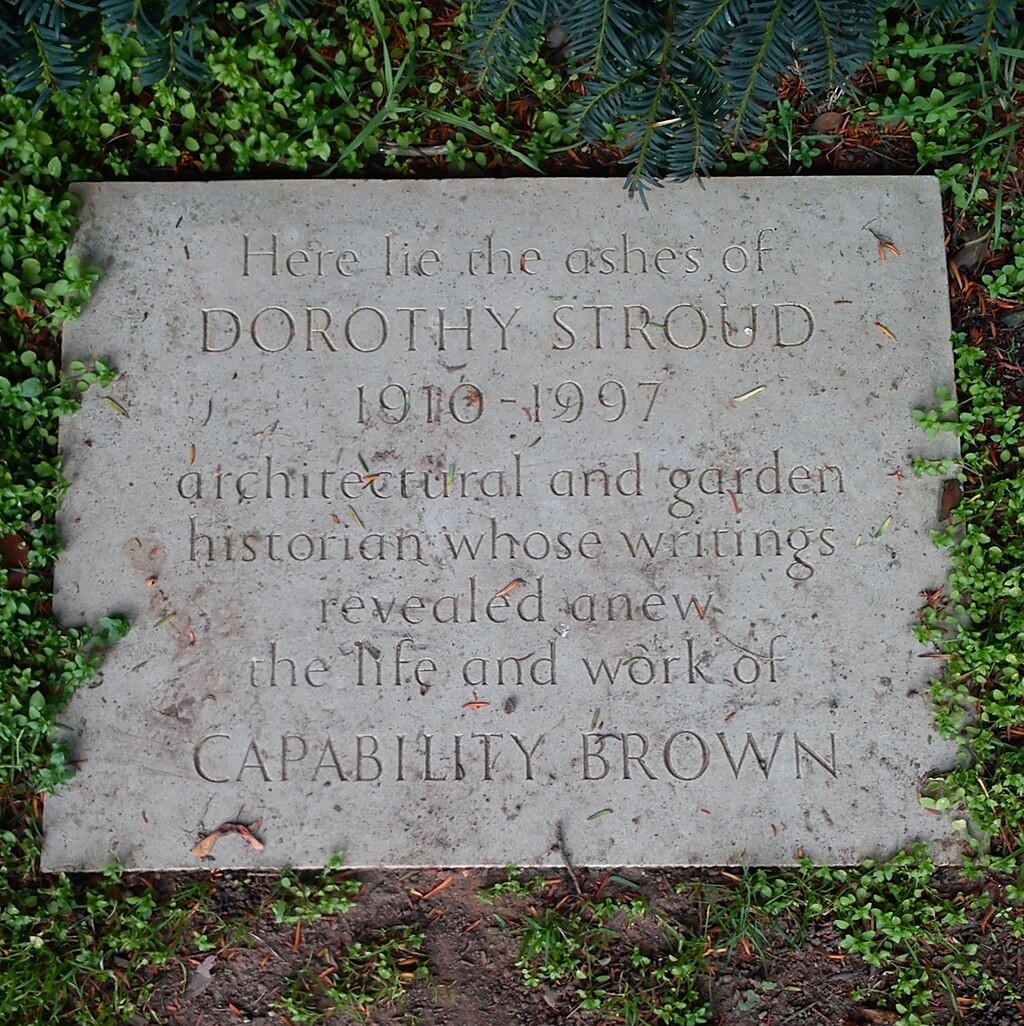
Dorothy Stroud was born in London in 1910 and was a garden and landscape architectural historian. She never married and spent most of her life managing a museum called Sir John Soane’s Museum in Lincoln’s Inn Fields in London. All her research work was done away from the museum, on her days off and writing mostly in the evenings. She was particularly fascinated by Capability Brown and published a book about him in 1950. She also published books on Soane’s architecture and a biography of landscape gardeners Humphrey Repton and Henry Holland. She served on the Historic Buildings Council between 1974 and 1982 and was also vice-president of the Garden History Society from 1982 until her death in 1997. When Dorothy Stroud died in 1997 at the age of 87 her ashes went to Croome Park and there is a plaque that shows her role in recording the life and works of him.
The Book
The copy we have is a first edition 1975. There are 262 pages in total with a map and index incorporating all of Capability Brown’s works, so if you are researching or doing a thesis on Brown for example, this would be a great book to have to hand.
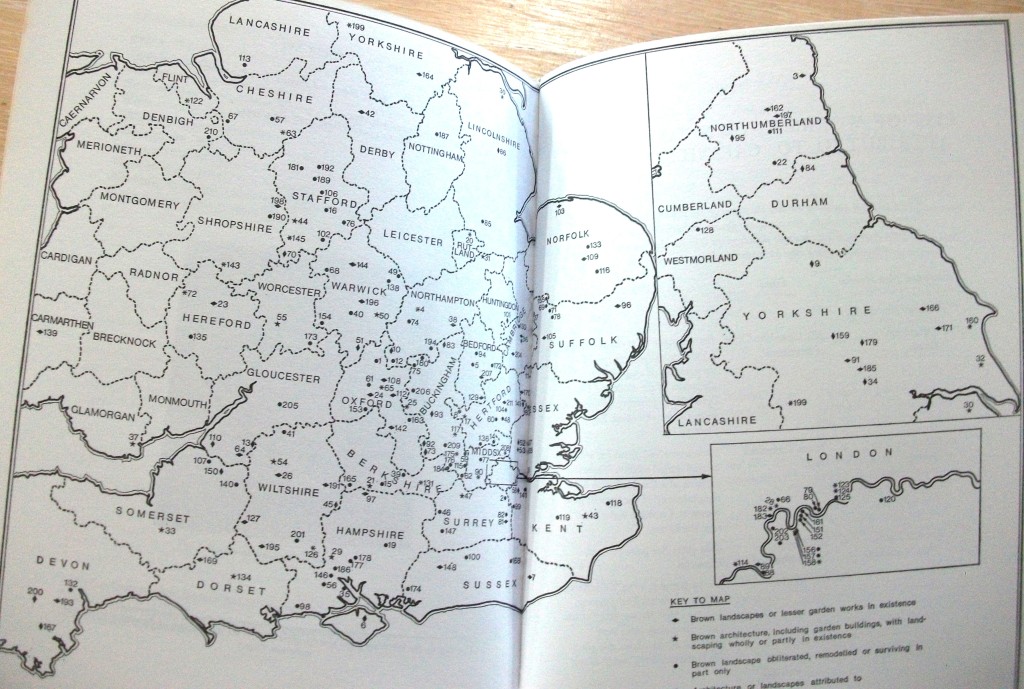
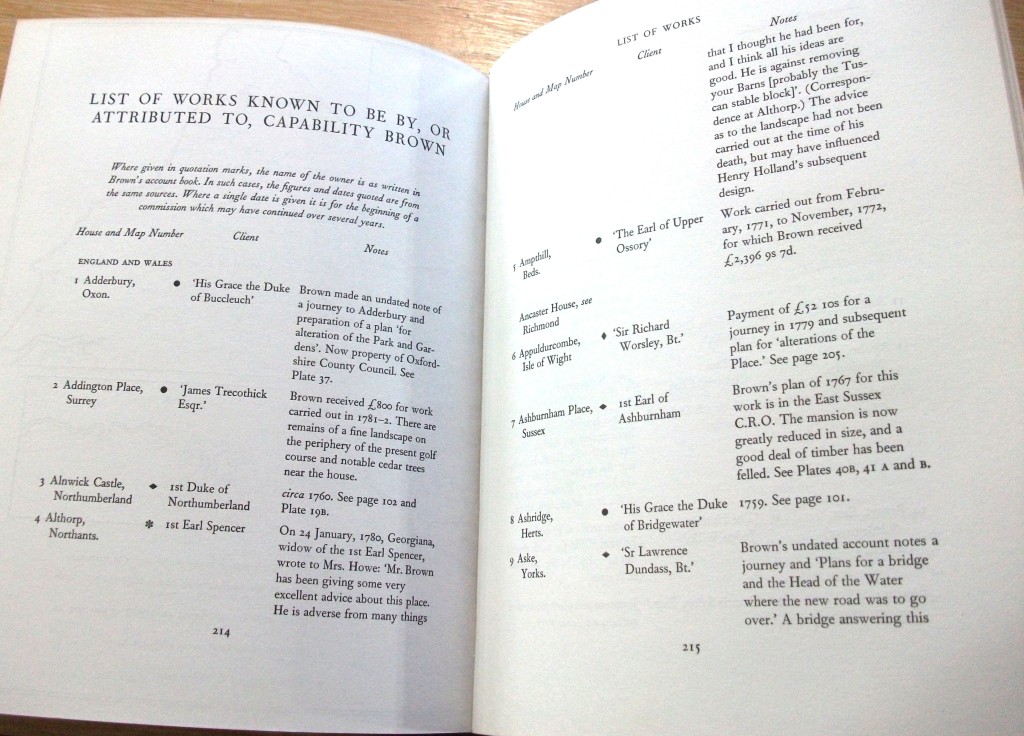
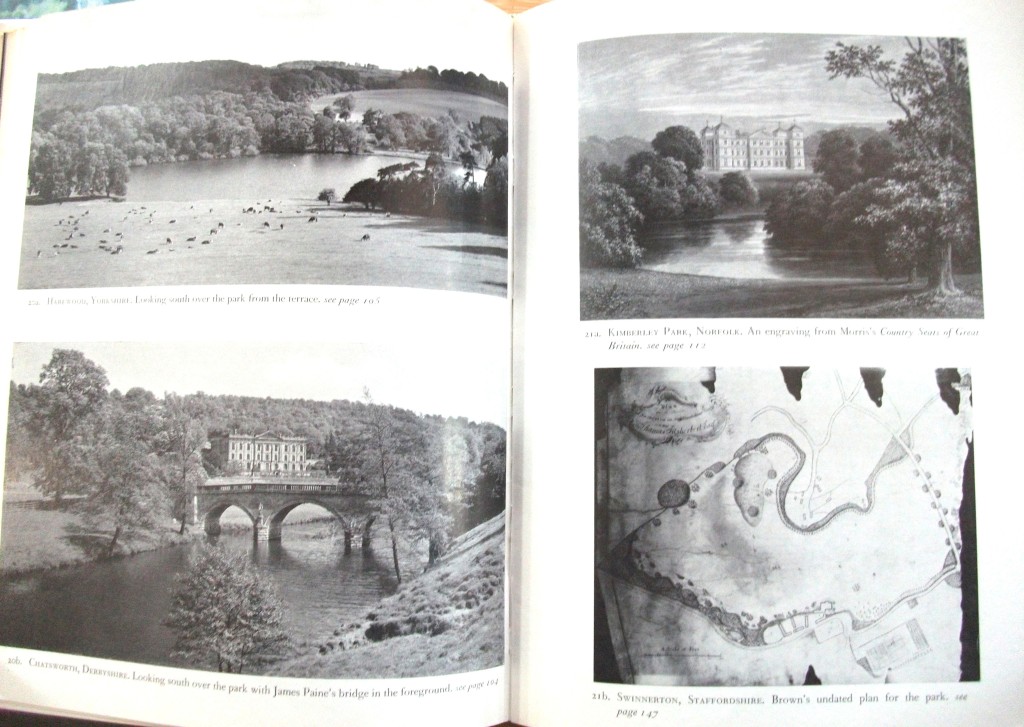
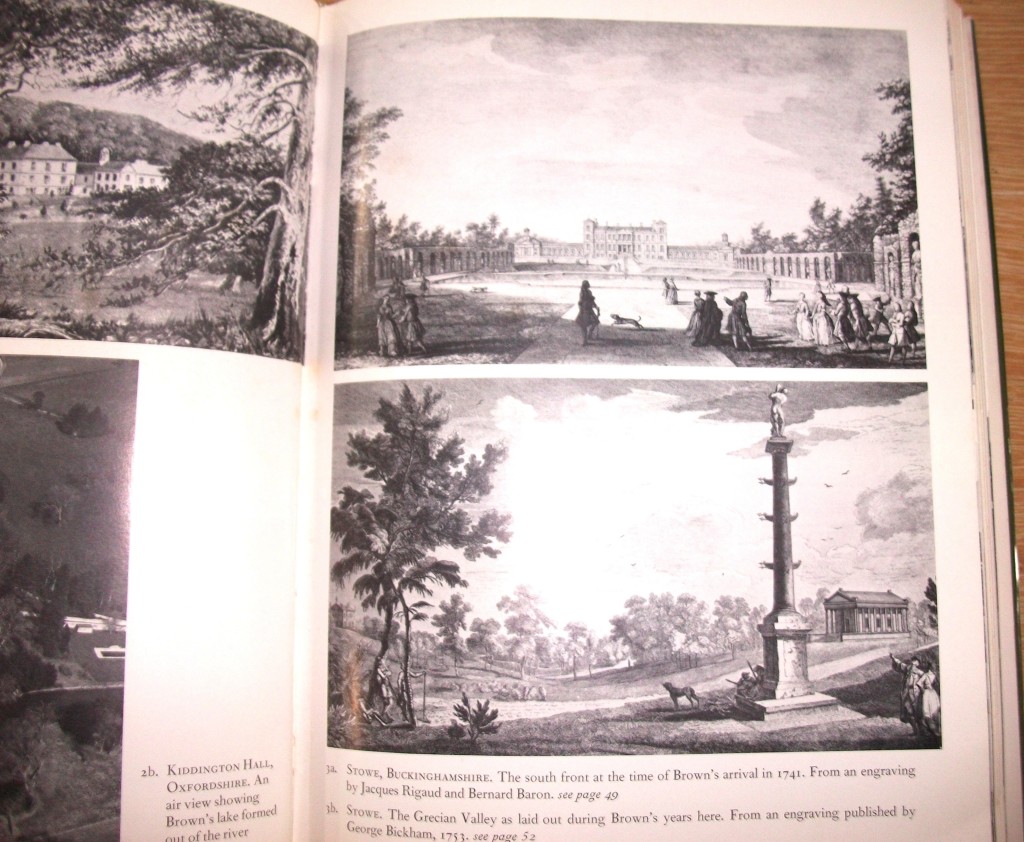
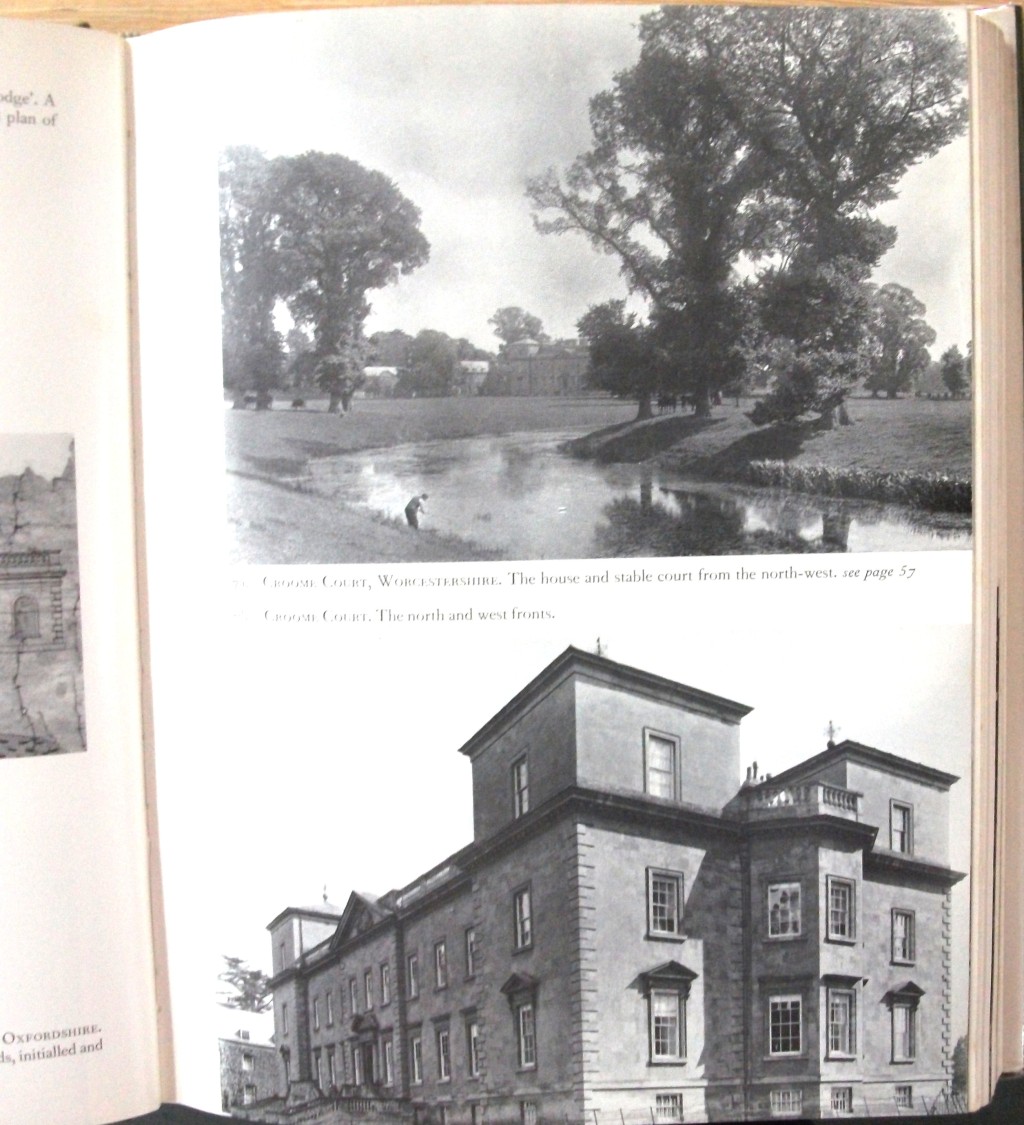
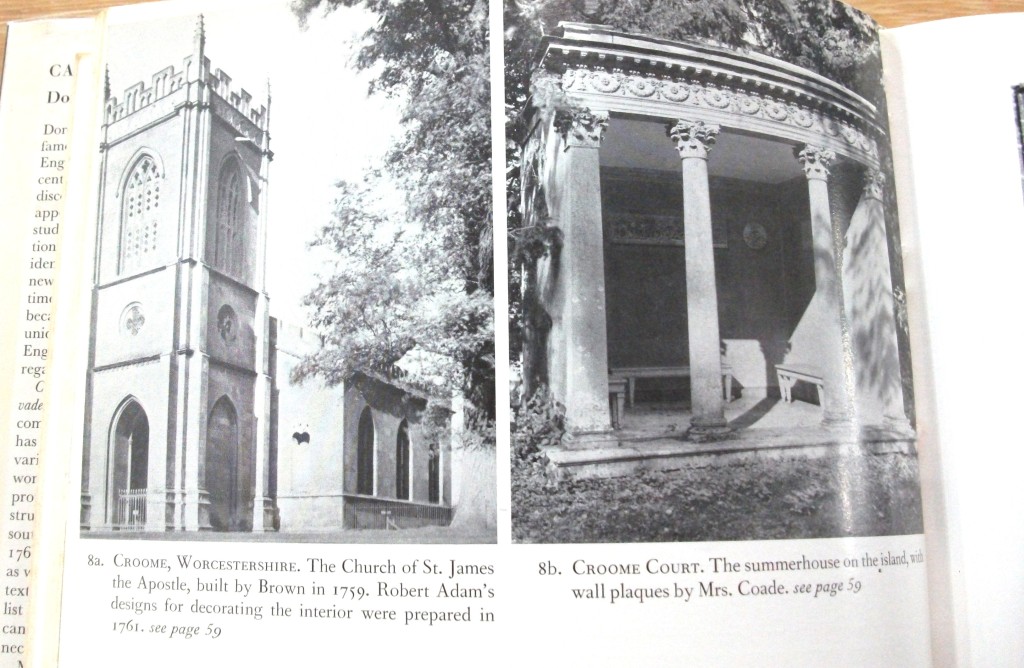
There are also lots of photographs, plates and plans of many of the houses and grounds that he worked on which are fascinating.
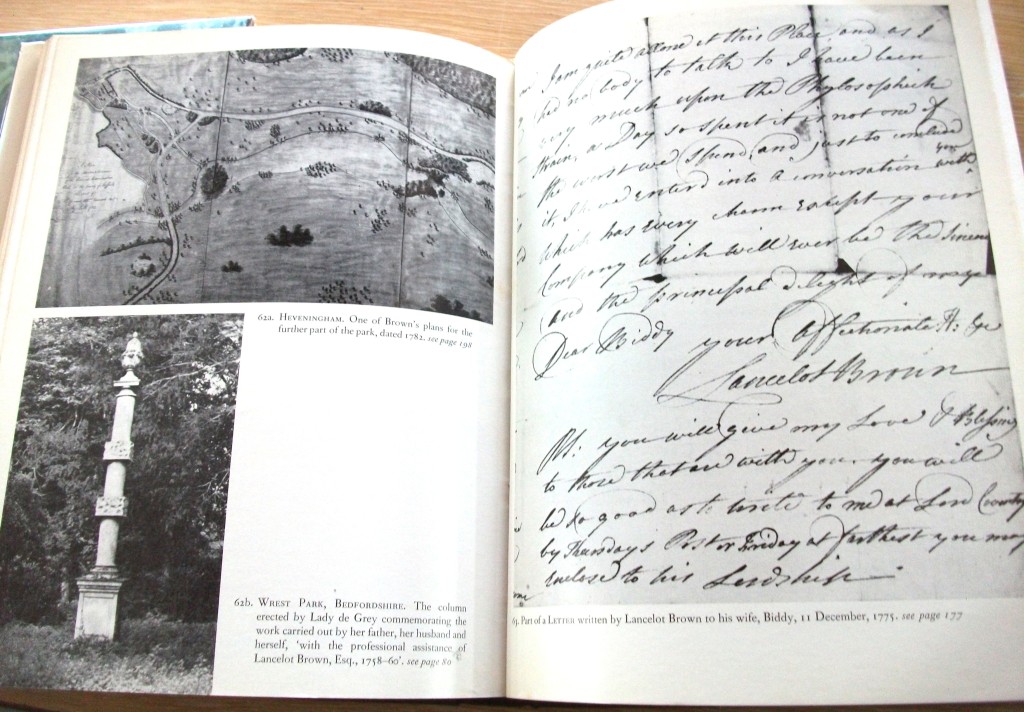
The Foreword to the book is written by the author explaining how she had to rewrite her original1950’s book on Capability Brown. She had spent most of her life collecting material and information on Brown, and after the Second World War in 1950 she published her first book. It was only after the book was published and the War was over, that more and more people started taking more of an interest in historical houses, architecture, gardens and Capability Brown himself. New pieces of information were coming to light about these grand houses due to old letters and accounts being found and handed over to the County Record Offices. Drawings and new material were also being discovered on the designer / architect, so Dorothy justified the re-writing of her earlier book. Although Brown is well known, there is not much written about him in great depth, so Dorothy Stroud provides a comprehensive written study of him detailing his life and achievements.
About Capability Brown
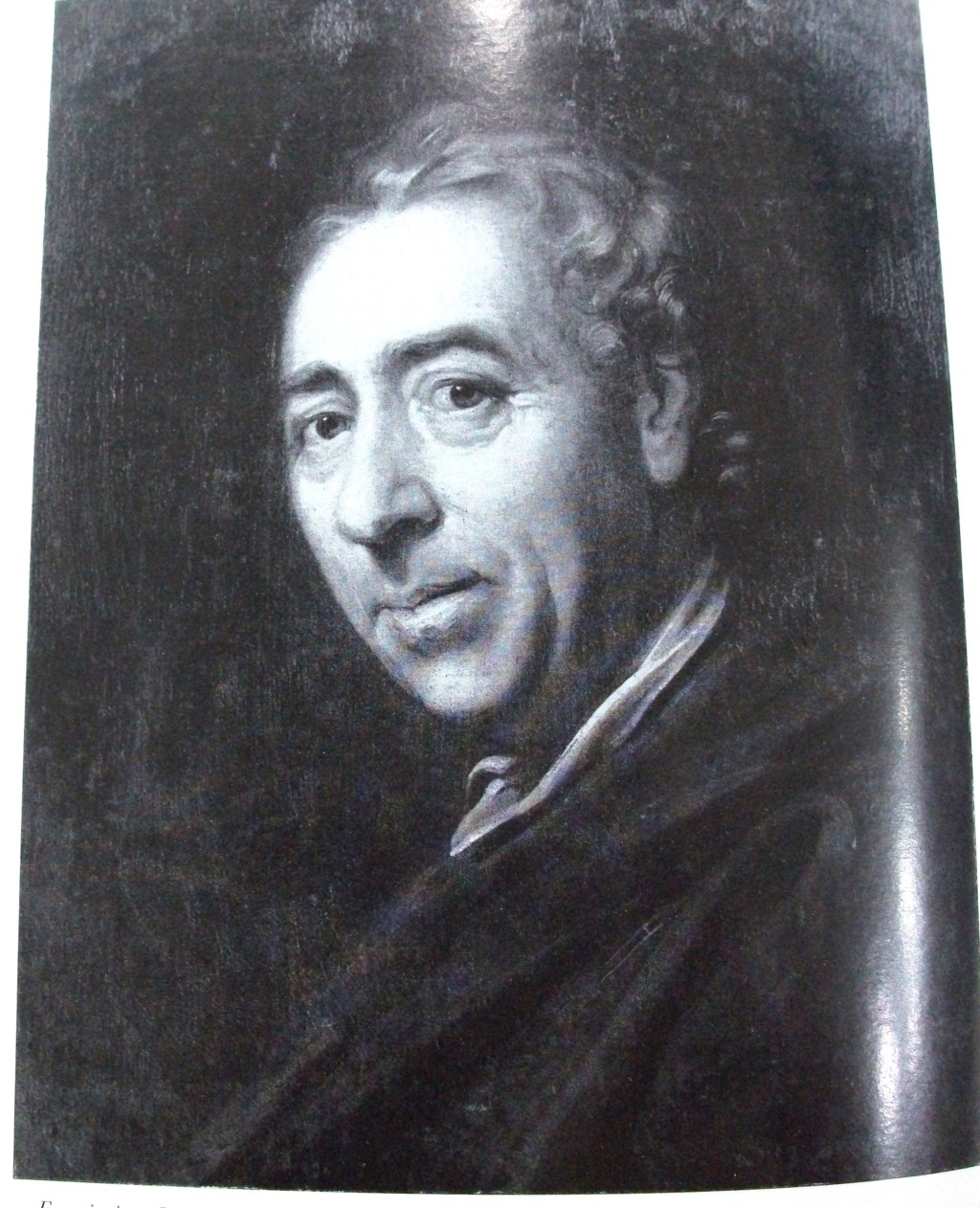
Lancelot Brown was born in 1716; his father was a landowner and his mother a chambermaid at Kirkharle Hall in Northumberland, and this is where Brown initially worked as the Head Gardener’s apprentice in the kitchen garden until the age of 23. After that he joined Lord Cobham’s gardening staff at Stowe in Buckinghamshire and was appointed Head Gardener when he was 26. His duties included showing the grounds to visitors, thus giving him a chance to make himself known to the nobility who were to be his clients.
At Stowe he worked for some years under the broad direction of the landscape architect William Kent. When Kent died, Brown set himself up as a garden designer and by 1753 he was the leading “improver of grounds” in England and quickly gained further gardening renown, receiving his nickname ‘Capability’ due to frequently telling his clients that their property had ‘capability’ for improvement.
Arguably his greatest creation at Stowe was the Grecian valley, a groundbreaking realisation of an Arcadian vision of Ancient Greece. Here, 24,000 cubic yards of soil, equivalent to the volume of 1,631 London double-decker buses, had to be dug out by hand from former farmland using spade and barrow and horse-drawn cart. Stowe remained one of the most admired landscape gardens Brown worked on. Catherine the Great paid a visit there and even had some of the design features replicated in her own gardens back in St Petersburg. In its time, Stowe rivalled royal gardens with its spectacular views, meandering paths, impressive lakes and seemingly endless landscape.
Brown’s private life also flourished whilst he was at Stowe. In 1744 he married Bridget Wayet and the couple went on to have eight children and lived in relative comfort due to his increasing fame and fortune. By the 1760s, Brown was the most sought-after landscape gardener of the time and was earning around £6,000 a year - equivalent to around £873,000 in today’s money!
In 1751 the 6th Earl of Coventry asked Brown to remodel his house at Croome, and the Earl wanted it to be similar to that of nearby Hagley Hall and so he asked Brown to help remodel the house into the fashionable Palladian style, removing the formal gardens and replacing them with natural-looking parkland, and creating a new lake and river. One of Brown’s trademark designs are ‘ha-ha’s’. These are sunken walls, ditches and fences used to separate the grounds from the parkland beyond, so it looks like one continuous piece of land. It is a long, sweeping feature and is a key element of the landscape. The ha’ha at Croome extends for about half a mile and protects the formal garden. He even dismantled the local village and rebuilt it further away, disguising it with trees to protect the views from Croome. This was one of Capability Brown’s first large commissions and was also one of his favourites. Brown and the Earl were to become lifelong friends, and the Earl erected a memorial by the lake dedicated to Brown:
“To The Memory of Lancelot Brown, who by the powers of his inimitable and creative genius formed this garden scene out of a morass”.
Lancelot was a hands-on gardener and provided his clients with a full turnkey service, designing the gardens and parks, and then managing their landscaping and planting. He is most famous for the landscaped parks of English country houses, many of which have survived reasonably intact. However, he also included in his plans "pleasure gardens" with flower gardens and the new shrubberies, usually placed where they would not obstruct the views across the park of and from the main facades of the house.
Brown was also flexible as to how the client would like things carried out. Clients might have provided the labour or just wanted Capability to draw a plan and that was it. Other times, clients wanted everything organised and carried out and completed by Brown. He employed workers and would travel the country keeping an eye on progress of the works. Sometimes jobs varied from a few hundred pounds to £21,500 as at Blenheim. His legacy can be seen at all these properties.
In 1768 Brown purchased the Manor of Fenstanton in Huntingdonshire from Lord Northampton. This came with two manor houses, two villages and 2,668 acres of land. He continued to work and travelled until his sudden collapse and death on 6 February 1783 which was on the doorstep of his daughter’s house in London while returning after a night out at Lord Coventry's. He was buried in the churchyard of St. Peter and St. Paul at Fenstanton Manor and left an estate of approximately £40,000 (equivalent to £6,080,000 in 2023), which included property in Cambridgeshire, Huntingdonshire and Lincolnshire.
It is estimated that Brown was responsible for more than 170 gardens surrounding the finest country houses and estates in Britain. His works include Belvoir Castle, Croome Court (where he also designed the house), Blenheim Palace, Warwick Castle, Harewood House, Chatsworth (where Pride & Prejudice was filmed), Highclere Castle (where Downtown Abbey was filmed), Milton Abbey and nearby Milton Abbas village, Kew Gardens and many, many more locations.
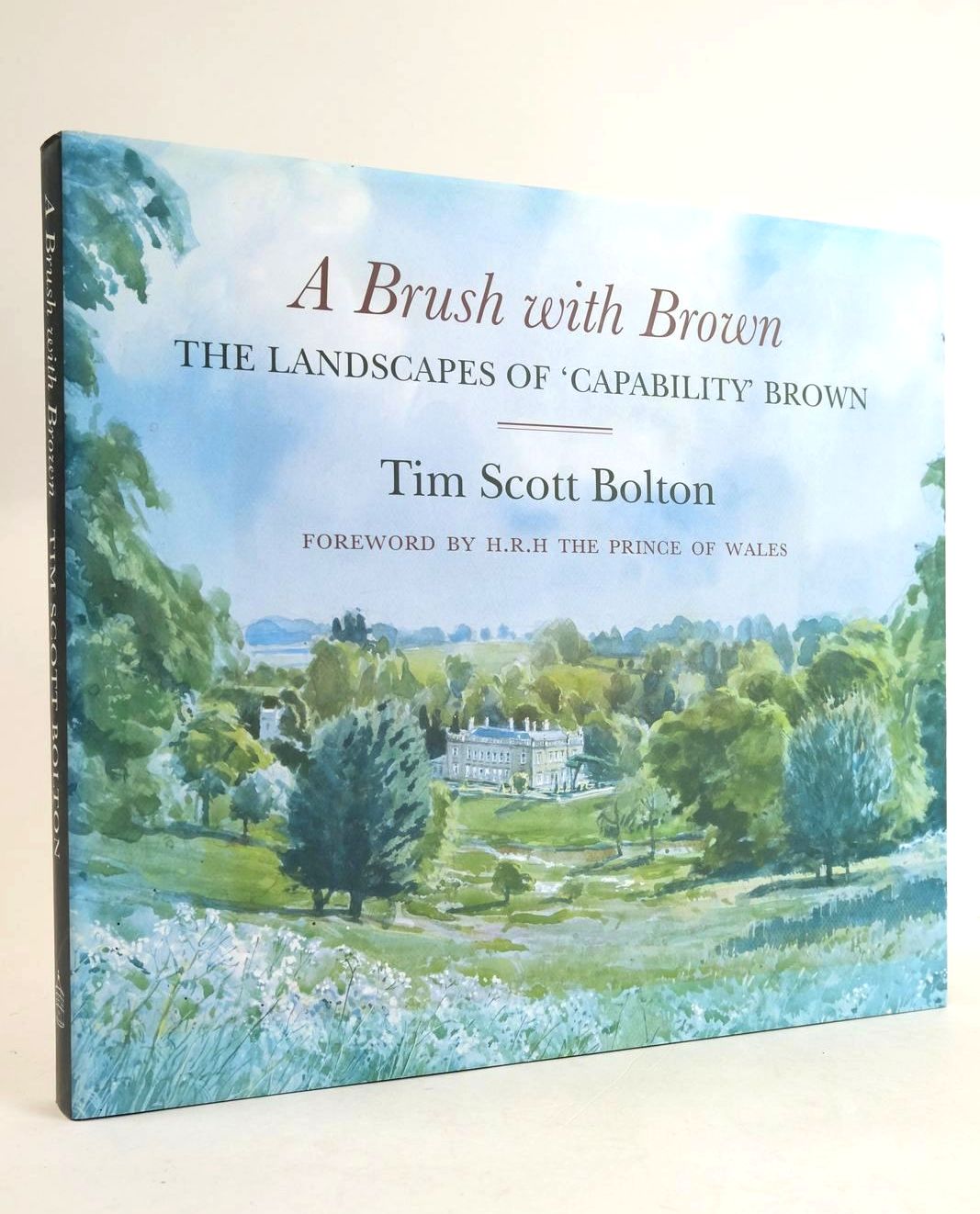
Some of the famous buildings he worked on include Warwick Castle, Chatsworth House and Burghley House. In 1763 he was commissioned by the 4th Duke of Marlborough to undertake work at Blenheim Palace. In London too, Brown’s influence continued as he became the Master Gardener for King George III at Hampton Court. This is mentioned by King Charles in the Foreword of another book that has just come into stock called “A Brush with Brown” by Tim Scott Bolton.
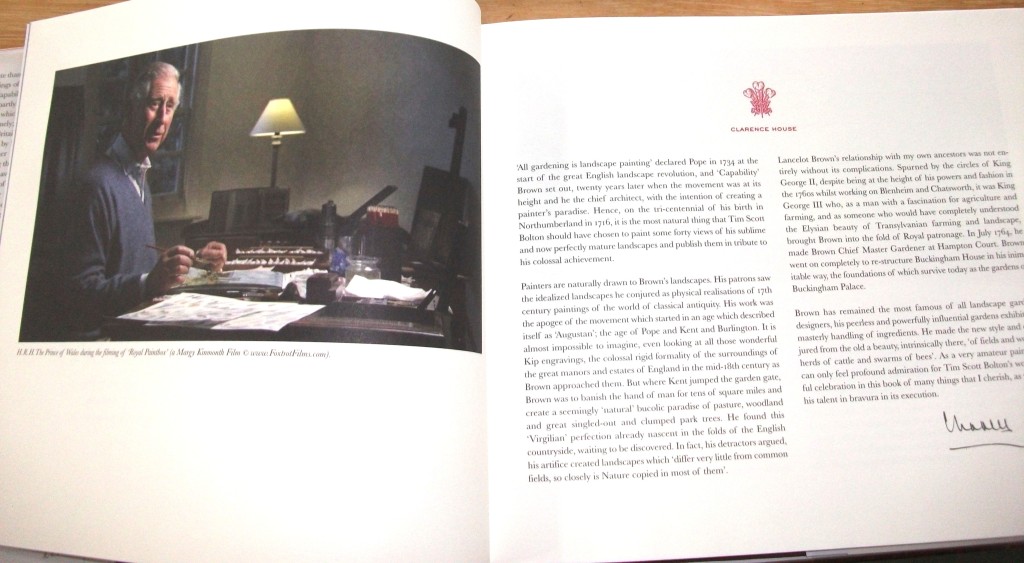
There is so much in the book about Capability Brown that there is too much to mention in my review, so this is just a tiny snapshot of his life, but as I have just mentioned, another book has just come in about him.
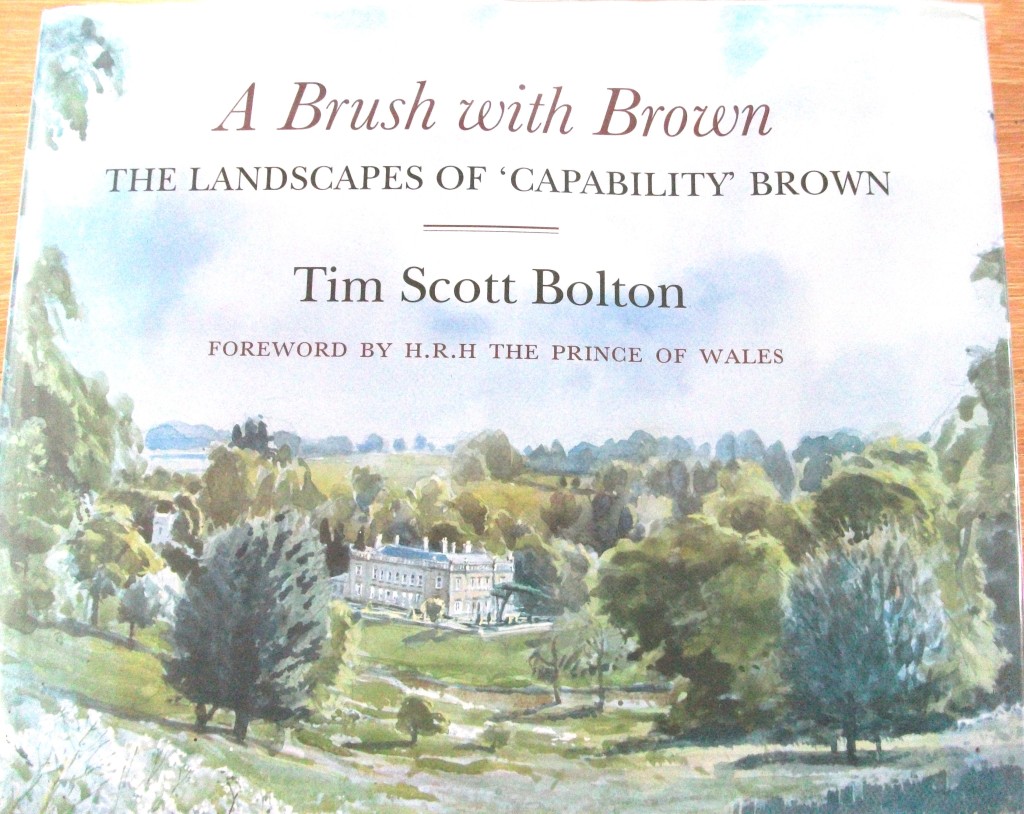
This book is written by the artist Tim Scott Bolton who has visited about a third of Brown’s properties and painted them in either watercolour or oils. The pictures in the book are stunning. With each of the paintings in the book the author has explained his method of painting and his techniques. Each property tells you how and why Capability Brown came to design them, and the author tells you how he painted it.
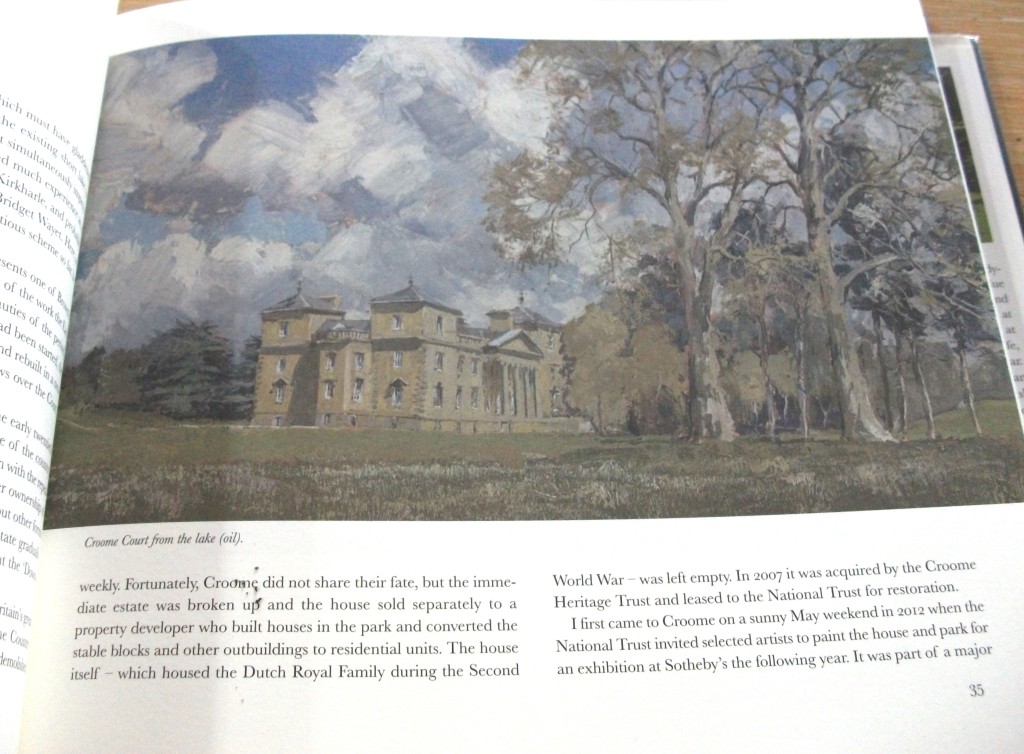
It is the sort of book you can buy and take with you to each property and discover for yourself where the artist sat to paint the picture. Or even better, why not take both books with you “Capability Brown” and “A Brush with Brown”! Choose a nice sunny day, take a picnic and soak in the surroundings of Capability Brown’s works. Enjoy!
With thanks to: Wikipedia and Britannica.com
Contributed by Lisa
(Published on 15th Jul 2025)