Stella and Rose's Books Logo

Stella & Rose's Books

Specialists in Rare & Collectable Books

  Basket is empty
  Login Register

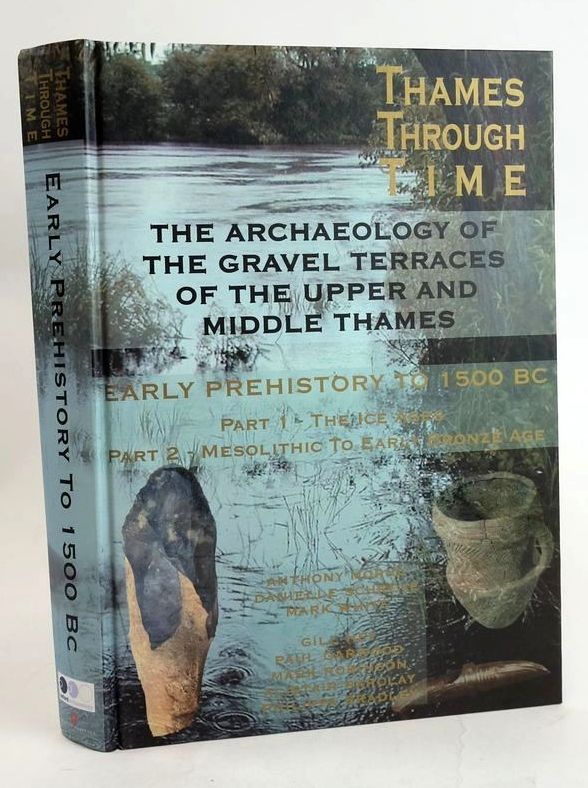
THE THAMES THROUGH TIME: THE ARCHAEOLOGY OF THE GRAVEL TERRACES OF THE UPPER AND MIDDLE THAMES

by Anthony Morigi; Danielle Schreve; Mark White; Gill Hey; Paul Garwood; Mark Robinson; Alistair Barclay; Philippa Bradley

Published by Oxford University School Of Archaeology. 1st. 2011

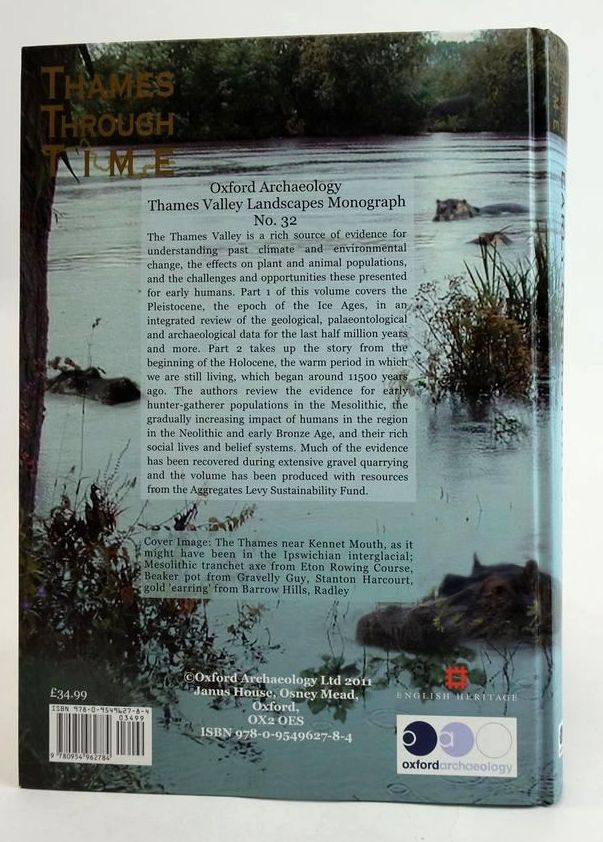
Slightly better than very good condition. Early Prehistory to 1500 BC. Part I - The Ice Ages; Part 2 - Mesolithic to Early Bronze Age. Oxford Archaeology Thames Valley Landscapes Monograph No. 32. Large format. Heavy. Pictorial boards. Colour & b/w illustrations. xxvi and 521 pages including index.

Crinkling to to margins of pages 179-186 else a lovely copy.

ISBN: 9780954962784
Stock no. 1829516

Enquire about this book Add to Wish List

Contents

  • PART 1 - THE ICE AGES: PALAEOGEOGRAPHY, PALAEOLITHIC ARCHAEOLOGY AND PLEISTOCENE ENVIRONMENTS
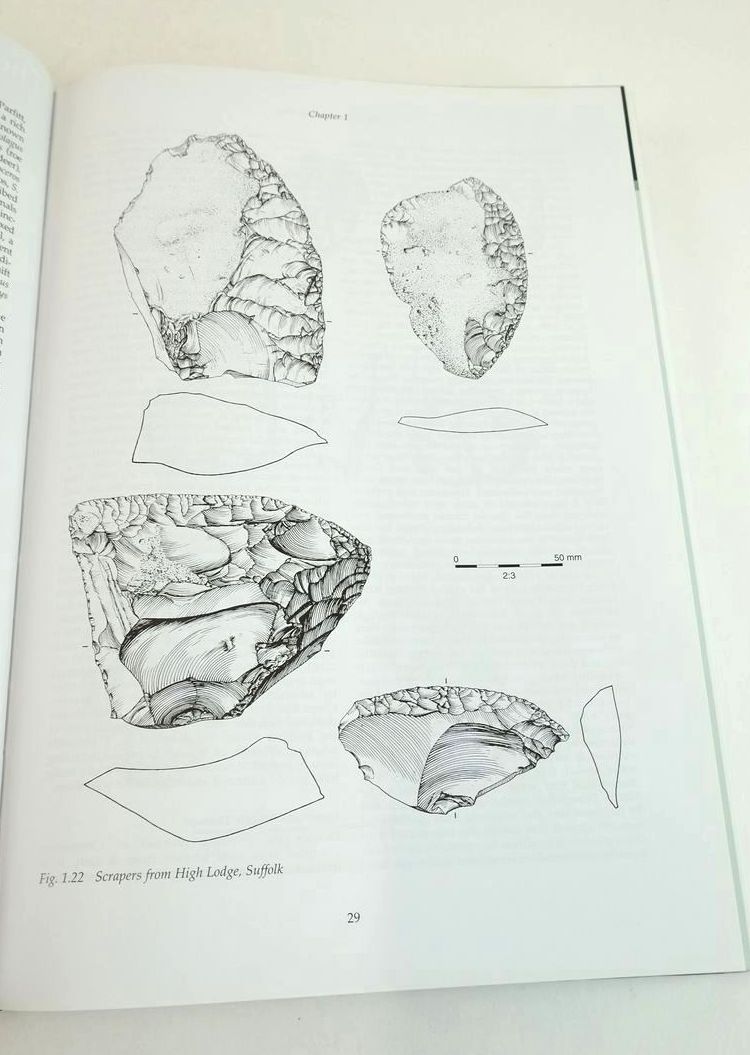
  • Chapter 1 - Introduction and teh Pre-Anglian Geological, Palaeo-Environmental and Archaeological Records by Anthony Morigi, Danielle Schreve and Mark White
  • Chronostratigraphy
  • North-Western European Setting of teh River Thames System
  • Topography and Geology of the Thames Catchment: An Overview
  • An overview of the river terrace deposits of the Thames
  • Climatic controls on Thames terrace formation
  • Tectonic controls on Thames terrace formation
  • Nomenclature of the river terrace deposits
  • The Early and Middle Pleistocene Environment and Occupation
  • The Early Pleistocene
  • The early Middle Pleistocene
  • The earliest occupation of Britain
  • Upper and Middle Thames
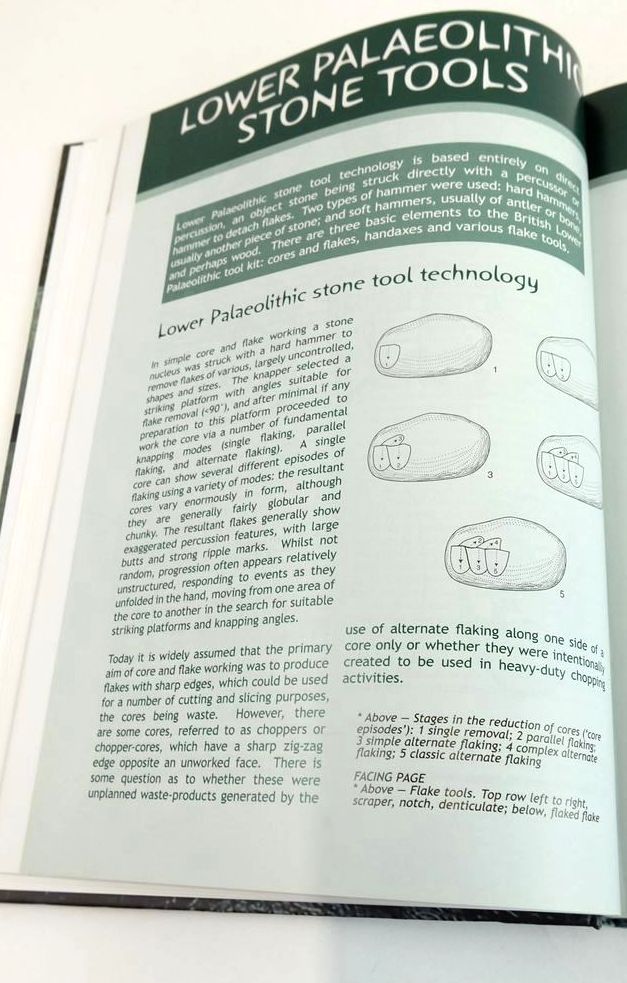
  • Hominin behaviour in the Lower Palaeolithic
  • CHAPTER 2 - THE DIVERSION OF THE THAMES, THE HOXNIAN INTERGLACIAL AND ADJACENT COLD STAGES (MIS 12-11-10) by Danielle Schreve, Anthony Morigi and Mark White
  • The Anglian Glaciation
  • The diversion of the Thanes
  • Palaeogeography of the terrace deposits
  • Correlation of the terrace deposits
  • Archaeology and Palaeontology of the Anglian Glaciation
  • The Hoxnian Interglacial
  • Sites outside the main area
  • Key sites in the Upper and Middle Thames
  • Key Debates in Hoxnian Archaeology
  • Clactonian-Acheulian
  • Hominin landscapes and habitats
  • Handaxe variation
  • CHAPTER 3 - THE 'PURFLEET' INTERGLACIAL AND ADJACENT COLD STAGES (MIS 10-8) by Mark White, Danielle Schreve and Anthony Morigi
  • Palaeogeography of the Terrace Deposits
  • Correlation of the terrace deposits
  • The Archaeology and Palaeoenvironment of the 'Purfleet' Interglacial
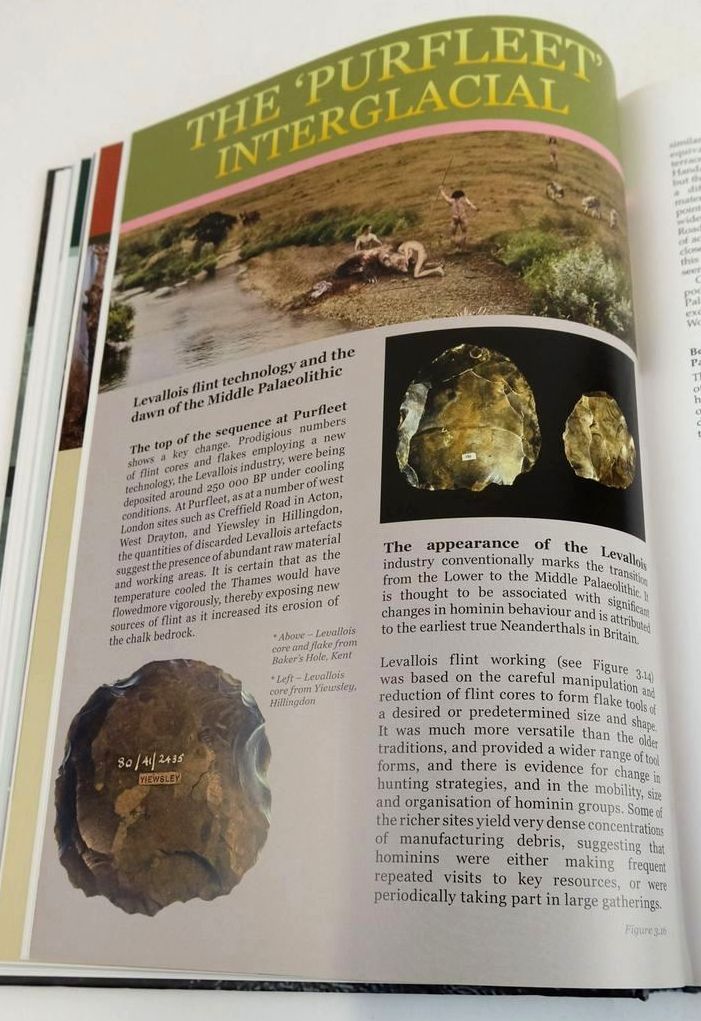
  • Levallois technology and the early Middle Palaeolithic
  • Behavioural changes a teh Lower-Middle Palaeolithic transition
  • CHAPTER 4 - THE 'AVELEY' INTERGLACIAL AND ADJACENT COLD STAGES (MIS 8-6) by Anthony Morigi, Mark White and Danielle Schreve
  • Palaeogeography of teh Terrace Deposits
  • Correlation of teh terraces
  • Archaeology and Palaeontology
  • Finds outside the study area
  • Sites in the main area
  • Human behaviour and population dynamics of MIS 7
  • CHAPTER 5 - THE ARCHAEOLOGY OF ABSENCE IN THE LATE PLEISTOCENE (mis 6-4) by Danielle Schreve, Mark White and Anthony Morigi
  • Palaeogeography of the Thames Terraces
  • Correlation of the terrace deposits
  • Archaeology and Palaeontology
  • Is the absence real or imaginary?
  • How can the absence be explained?
  • MIS 5E: The Ipswichian Interglacial
  • MIS 5D-4: The Early Devensian
  • CHAPTER 6 - THE MIDDLE AND LATE DEVENSIAN (MIS 3-2) by Mark White, Anthony Morigi and Danielle Schreve
  • Palaeogeography of the Terraces
  • Correlation of the terraces
  • The Late Middle Palaeolithic
  • The Early Upper Palaeolithic (EUP)
  • CHAPTER 7 - THE TERMINAL PLEISTONCENE-EARLY HOLOCENE TRANSITION (MIS2-1), C 20-10 000 BP by Danielle Schreve, and Mark White with contributions by Gill Hey, Philip Jones, Anthony Morigi and Mark Robinson
  • Palaeogeography of the Terraces
  • Correlation of the terraces
  • Lateglacial Humans and their Environment
  • The Last Glacial Maximum
  • The return of humans in the lateglacial (Windermere) Interstadial
  • The Late Upper Palaeolithic
  • The Final Upper Palaeolithic
  • The last cold spell: the Younger Dryas/Loch Lomond stadial
  • Later glacial environments
  • Human occupation: Final Upper Palaeolithic 'long blade' industries
  • PART 2: THE MESOLITHIC, NEOLITHIC AND EARLY BRONZE AGE AND THE ESTABLISHMENT OF PERMANENT HUMAN OCCUPATION IN THE VALLEY
  • CHAPTER 8: AN INTRODUCTION TO THE HOLOCENE OF THE THAMES by Gill Hey with Chris Hayden
  • Introduction to the Holocene of teh Thames
  • The History of Research
  • The Nature of the Evidence
  • Preservational environments
  • The state of preservation of archaeological remains
  • Investigating Mesolithic, neolithic and early Bronze Age remains
  • Chronology and Definitions: An Overview
  • The role of material culture
  • The impact of the radiocarbon dating on our understanding of the period
  • A brief overview
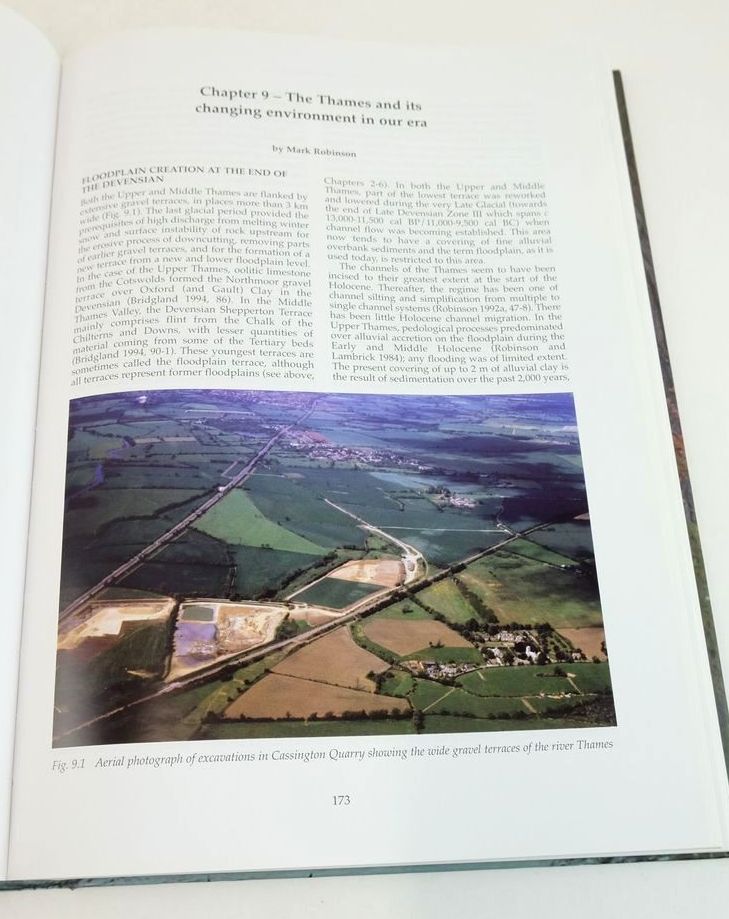
  • CHAPTER 9 - THE THAMES AND ITS CHANGING ENVIRONMENT IN OUR ERA by Mark Robinson
  • Floodplain Creation at the end of the Devensian
  • Palaeohydrology
  • The Late Devensian to Holocene transition c 11,500 cal BP/9500 cal BC
  • The Mesolithic c 9600-4000 cal BC
  • The Neolithic c 4000-2500 cal BC
  • The early Bronze Age c 2500-1500 cal BC
  • Aquatic conditions
  • Vegetational Succession
  • The early Mesolithic (Flandrian Zone I, 9400-6000 cal BC)
  • The late Mesolithic (Flandrian Zone II, 6000-4000 cal BC)
  • The Elm decline and teh earliest Neolithic, c 4000 cal BC
  • The Neolithic, c 4000-2500 cal BC)
  • The early Bronze Age (2500-1500 cal BC)
  • Middle Bronze Age postscript (1500 cal BC onwards)
  • Origin and Development of Agriculture in teh Thames Valley
  • CHAPTER 10 - MESOLITHIC COMMUNITIES IN THE THAMES VALLEY: LIVING IN THH NATURAL LANDSCAPE by Gill Hey with Mark Robinson
  • Hunter-Gatherers
  • Movement and Habitation in the Early Mesolithic
  • The Kennet Valley
  • Early Mesolithic habitation elsewhere in the Thames Valley catchment
  • Later Mesolithic Habitation in teh Thames Valley
  • Mesolithic Lifeways
  • Hunter-Gatherers and Natural Resources
  • CHAPTER 11 - NEOLITHIC COMMUNITIES IN THE THAMES VALLEY: THE CREATION OF NEW WORLDS by Gill Hey with Mark Robinson
  • World in Transition: Changing Landscapes of the Early 4th Millennium CAL BC
  • Inherited landscapes
  • Changing landscapes
  • Woodland clearance
  • The evidence from three-throw holes
  • The Creation of New Worlds
  • Hoses
  • Middens
  • Artefact Scatters
  • Pits
  • New objects and materials
  • New foods
  • Animal and dairying
  • Cereals
  • Becoming 'Neolithic'
  • Neolithic Habitation: Living in an Altered Landscape
  • The early Neolithic settlement of the Thames Valley
  • Later Neolithic land use and teh social landscape
  • CHAPTER 12 - INSCRIBING THE LANDSCAPE: NEOLITHIC FUNERARY AND CEREMONIAL MONUMENTS by Gill hey and Alistair Barclay
  • Constructing Monuments and Burying the Dead
  • The Earliest Monuments
  • The Cotswolds monuments
  • Early monuments on the Chalk
  • Funerary and other small monuments of the 4th millennium on the river gravels
  • Causewayed Enclosures
  • Cursus Monuments and Bank Barrows
  • Henges
  • Stone and Timber Circles
  • Monument Complexes
  • CHAPTER 13 - DOMESTICATING THE LANDSCAPE: SETTLEMENT AND AGRICLTURE IN THE EARLY BRONZE AGE by Gill Hey with Mark Robinson
  • The End of the Neolithic, the Beginning of the Bronze Age, and teh Beaker Phenomenon
  • Settlement at the Beginning of the Bronze Age
  • Bronze Age Settlement in teh Early 2nd Millennium CAL BC
  • Evidence for Change in Early Bronze Age Settlement
  • Landscape, Land Use and Farming
  • A Changed Landscape
  • CHAPTER 14: RITUAL, CEREMONY AND COSMOLOGY by Paul Garwood with Gill Hey and Alistair Barclay
  • Ritual Practices and Ceremonial Monuments by Paul Garwood
  • Interpreting ritual and ceremony
  • Ritual and material culture: special objects and structured deposits
  • Sacred places: space, knowledge and ceremonial architecture
  • The creation of sacred landscapes: ritual and cosmography
  • Interpreting Neolithic Ceremonial Monuments and Depositional Practices by Alistair Barclay with Paul Garwood and Gill Hey
  • The simple tombs of teh north-east Cotswolds
  • Long barrow, cairns and mortuary structures
  • Causewayed enclosures
  • Cursus monuments and related structures in the Thames Valley
  • Henges
  • Neolithic round barrow, ring ditches and pit circles
  • Earth, Ceremony and Monumental Architecture in teh Beaker Period and Early Bronze Age by Paul Garwood
  • Round barrows as ceremonial architecture
  • Round barrow groups as ceremonial complexes
  • Acts of Ritualised Deposition in Pits, Tree-Throw Holes and Middens by Alistair Barclay and Paul Garwood
  • River Deposits and Votive Offerings by Alistair Barclay
  • Ritual, Ceremony and Cosmography
  • CHAPTER 15: MAKING THE DEAD by Paul Garwood with a contribution by Alistair Barclay
  • Funerary Ritual and Society by Paul Garwood
  • Early Neolithic Mortuary Practices: Imagining, Making and Celebrating the Dead by Paul Garwood
  • Exceptional Events: Complex Burials in the Late 4th-Early 3rd Millennia CAL BC by Paul Garwood and Alistair Barclay
  • A Time and a Place for the Cremation Cemetery by Paul Garwood and Alistair Barclay
  • Beaker Period and Early Bronze Age Funerary Practices, 2500-1800 CAL BC by Paul Garwood
  • Radical departures: Beaker funerary ritual and the late Neolithic ceremonial landscape
  • Communities of the dead, single graves and mortuary symbolism, 2100-1800 cal BC
  • Early Bronze Age Burials, Monuments and Landscape, 1900-1500 CAL BC by Paul Garwood
  • The diversity and complexity of early bronze Age funerary practices
  • Funerary deposition in 'open' arena and premound contexts
  • Funerary deposition in 'closed' primary contexts sealed by mounds
  • Satellite burials and complex early Bronze Age funerary architecture
  • Burning events, pyres, and funerary display
  • The elite dead: power and identity
  • CHAPTER 16: MEANINGFUL MATERIALS: PROCUREMENT, PRODUCTION AND EXCHANGE by Alistair Barclay and Philippa Bradley
  • Introduction
  • Meaningful materials
  • Exchange
  • Deposition and discard
  • Raw Materials
  • Flint and stone
  • Shell
  • Clay Organic materials
  • Metals
  • Production and Craftsmanship
  • Working stone and flint
  • Knowledge of materials and craftsmanship
  • Lithic assemblages and their analysis
  • Mesolithic flintworking techniques
  • Neolithic flintworking techniques
  • Bronze Age flintworking techniques
  • Stone working
  • Amber
  • Shale, lignite and jet
  • Shells, fossils and other natural materials
  • Faience
  • Organic materials
  • Woodworking
  • Worked bone, horn and antler
  • Textiles, fibres, leather and resin
  • New Technologies
  • Pottery: a novel technology
  • The place of potting within the community
  • Development of pottery production and decoration
  • The first metalwork
  • Glossary
  • Bibliography
  • Index

Similar Stock