

MANUAL OF SALMONID FARMING
Written by Stephen Willoughby
Published by Fishing News (Books) Ltd.; Blackwell Science
in 1999
ISBN: 0852382456
- Categorised in:
- NATURAL HISTORY
- FRESHWATER LIFE
- SALMON
- TROUT
- FISHING (COMMERCIAL)
- FARMING
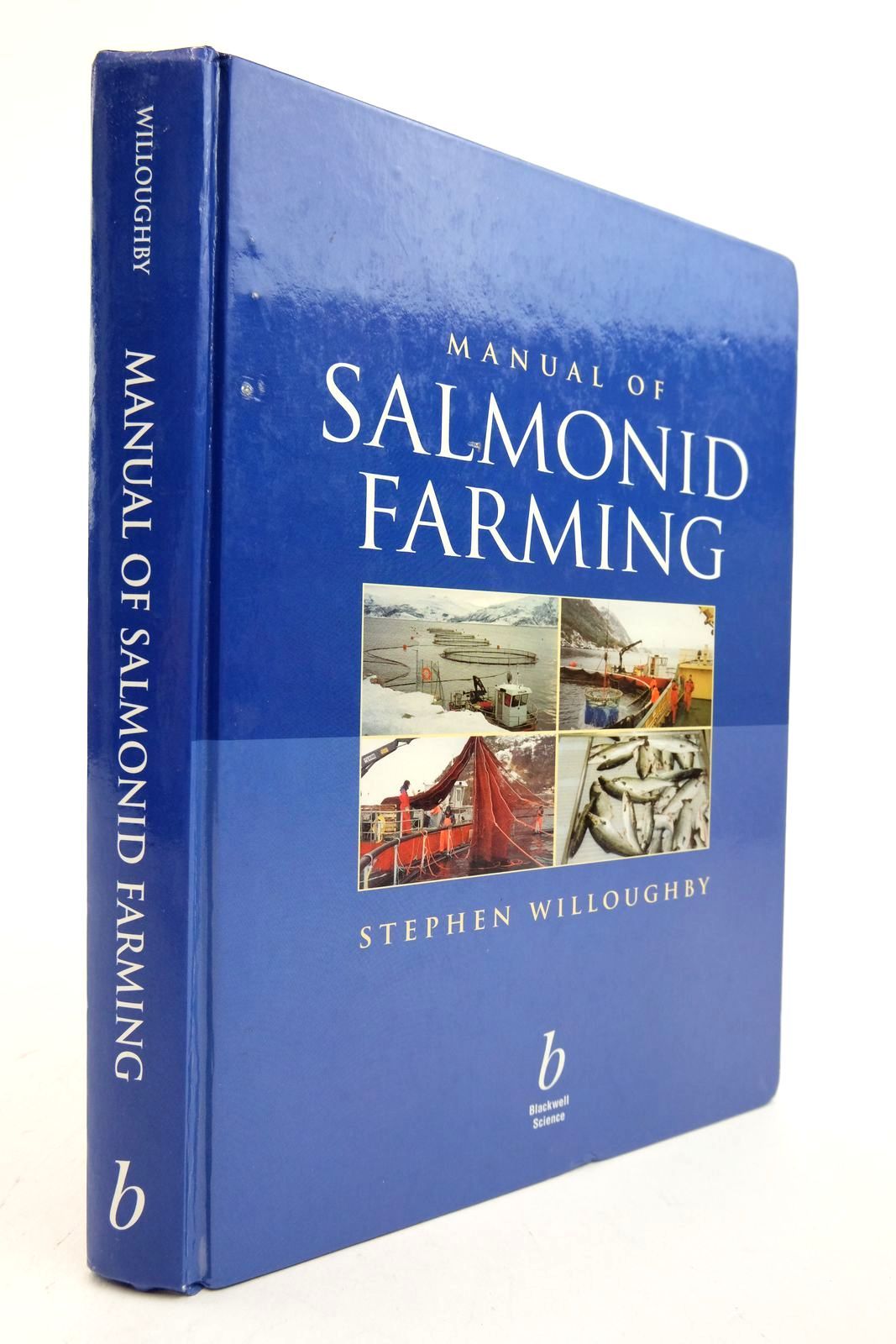 View more images
MANUAL OF SALMONID FARMING
Written by Stephen Willoughby.
Stock no. 2139607
1st.
1999.
Hardback.
Very good condition.
Glazed pictorial boards. Colour and b/w photos. B/w diagrams. This practical text is designed as a benchmark reference to the many technical aspects of salmon and trout farming, the varied issues of growth and development, operational and administrative concerns, environmental requirements and consequences, nutrition and feeding, disease prevention and control, harvesting and fish quality, genetics and breeding technology, and marketing. ISBN: 0852382456. Bumping and wear to spine, corners and cover edges. A few marks to covers. Light page edge browning, with a few foxspots to outer page edges.
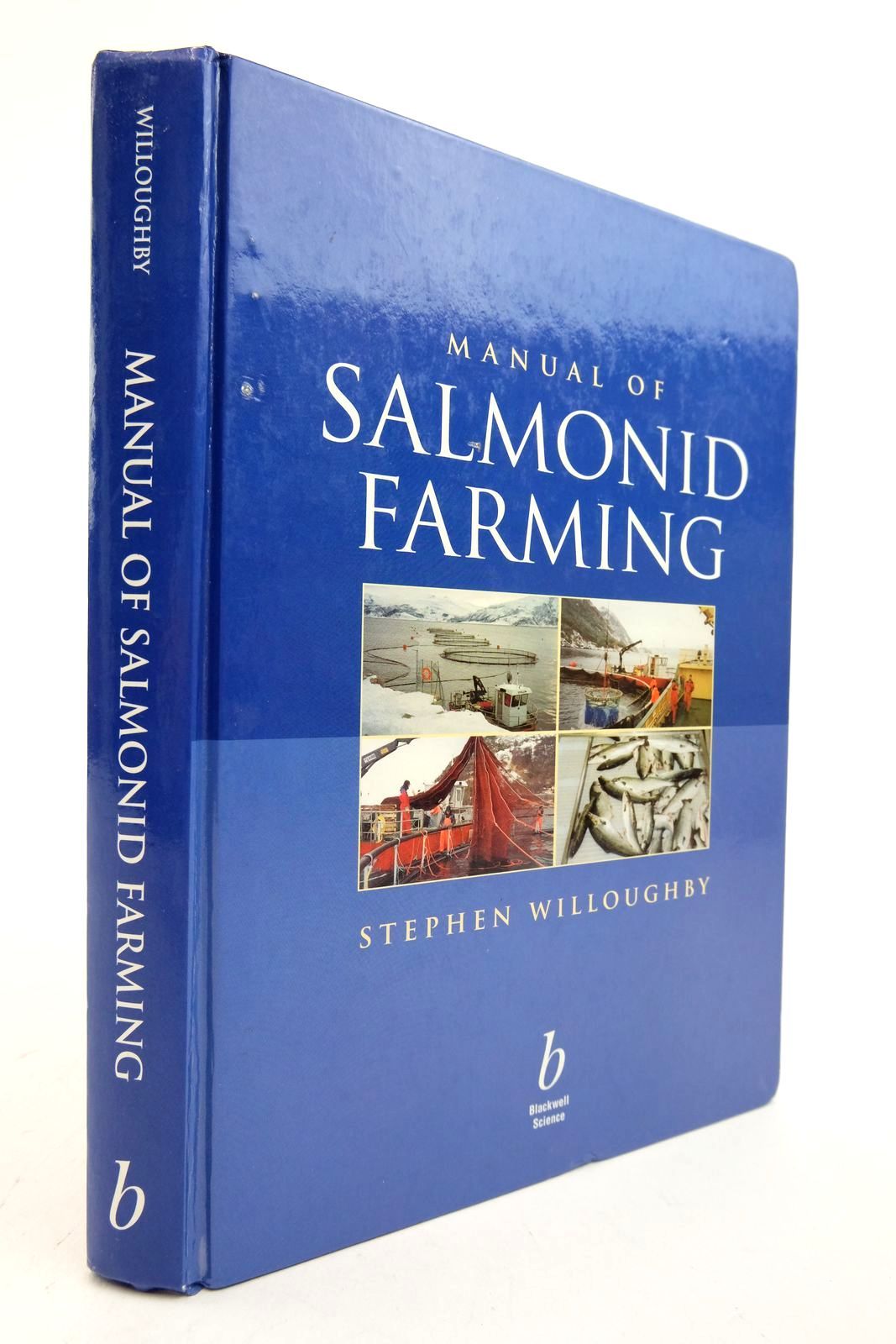
Front cover
Contents
- Foreword
- Preface
- Acknowledgements
- 1. Salmonid Culture: History and Development
- GUEST EDITORIAL: Petter Tidemand-Johannessen
- 1.1 Introduction
- 1.2 Development of the salmonid farming industry
- 1.2.1 Development in Europe
- 1.2.2 Development in North America
- 1.2.3 Development in South America
- 1.2.4 Development in Asia
- 1.3 Summary
- 1.4 References
- 2. The Life History of Salmonid Fish
- 2.1 Introduction
- 2.1.1 Genus Salmo
- 2.1.2 Genus Oncorhynchus
- 2.1.3 Genus Salvelinus
- 2.1.4 Genus Thymallus
- 2.2 The Anatomy of the salmonid fish
- 2.2.1 The skin
- 2.2.2 Muscular system
- 2.2.3 Respiratory system
- 2.2.4 Circulatory system
- 2.2.5 Digestive system
- 2.2.6 Exretory system
- 2.2.7 Immune system
- 2.2.8 Reproductive system
- 2.2.9 Nervous system
- 2.2.10 Endocrine system
- 2.3 the natural life cycle of salmonids
- 2.3.1 Spawning behaviour
- 2.3.2 Juvenile development
- 2.3.3 Smoltification
- 2.3.4 Life in the sea
- 2.4 References
- 3. Environmental Requirements and Consequences of Fish Farming
- 3.1 Introduction3
- 3.2 Environmental requirements for water
- 3.3. Environmental consequences of aquaculture
- 3.3.1 Organic nutrient discharge
- 3.3.2 Biological fouling
- 3.3.3 Disease introduction
- 3.3.4 Medication
- 3.3.5 The use of other chemicals
- 3.3.6 Release of farmed fish into the environment
- 3.4 Monitoring models
- 3.5 Choice of locality
- 3.5.1 Biological requirements of the fish
- 3.5.2 Available technology
- 3.5.3 Governmental requirements
- 3.5.4 Satisfactory economic prospects
- 3.5.5 Institutional support and grants
- 3.6 References
- 4 Production Life Cycle
- 4.1 Introduction
- 4.2 Broodstock management
- 4.2.1 Environement conditions and handling
- 4.2.2 Dietary needs
- 4.3 The Hatchery
- 4.3.1 Stripping of broodstock
- 4.3.2 Ova care and development
- 4.3.3 Hatching
- 4.3.4 Startfeeding
- 4.4 Fry and fingerling development
- 4.4.1 Environmental conditions
- 4.4.2 Exercise
- 4.5 Smolt production
- 4.5.1 Smolt types
- 4.5.2 Measurement of Smoltification
- 4.5.3 Smolt survival
- 4.6 Ongrowing and marine cages
- 4.6.1 Fish behaviour
- 4.6.2 Dailly and seasonal patterns
- 4.6.3 Reproductive strategies
- 4.7 References
- 5 Salmonid Farming Technology
- 5.1 Introduction
- 5.2 Cage types
- 5.2.1 Floating net cages
- 5.2.2 Semi-submersible cages
- 5.2.3 Enclosed floating bag system
- 5.2.4 Boat or barge farms
- 5.3 Land based fish farms
- 5.3.1 Earth ponds
- 5.3.2 Raceways
- 5.3.3 Closed Production systems
- 5.4 Controlled environment or recirculation systems
- 5.4.1 Removal of solids or particuate mater
- 5.4.2 Ammonia and nitrogen removal
- 5.4.3 Sterilisation
- 5.5 Equipment
- 5.5.1 Positioning of nets
- 5.5.2 Changing and cleaning fouled nets
- 5.5.3 Feed monitoring devices
- 5.5.4 Fish and cage monitoring sytems
- 5.5.5 Grading and splitting of fish stocks
- 5.5.6 Fish transportation systems
- 5.6 Light manipulation
- 5.6.1 Potential problems in use
- 5.7 References
- 6 Feed and Feeding
- GUEST EDITORIAL: Per Otto Hjertenes
- 6.1 Nutritional components
- 6.1.1 Energy
- 6.1.2 Proteins
- 6.1.3 Fats
- 6.1.4 Carbohydrates
- 6.1.5 Vitamins
- 6.1.6 Minerals
- 6.1.7 Pigments
- 6.2 Feeding equipment and feed type
- 6.2.1 Feeding equipment
- 6.2.2 Feed types
- 6.2.3 The future of feeds
- 6.3 Feeding
- 6.3.1 Feeding behaviour
- 6.3.2 Feeding strategies
- 6.3.3 Effect of feeding on growth
- 6.3.4 Estimation of ration level
- 6.4 References
- 7 Disease Prevention and Control
- GUEST EDITORIAL: Jan Arne Holm
- 7.1 Introduction
- 7.2 Stress
- 7.2.1 Physiological effects of stress
- 7.2.2 Stress and aquaculture
- 7.2.3 Stress indicators
- 7.3 Infectious diseases
- 7.3.1 Bacterial diseases
- 7.3.2 Viral diseases
- 7.3.3 Parasitic diseases
- 7.3.4 Fungal diseases
- 7.4 Non-infectious diseases and conditions
- 7.4.1 Nutritionally dependent diseases
- 7.4.2 Environmentally dependent diseases and conditions
- 7.4.3 Problems with plankton
- 7.5 Miscellaneous problems
- 7.6 Disease treatment
- 7.6.1 Heath care management programs
- 7.6.2 Methods of disease treatment
- 7.6.3 Future methods of disease control
- 7.7 References
- 8 Harvesting and Fish Quality
- 8.1 Harvesting of Fish
- 8.1.1 Harvesting float line
- 8.1.2 Problems during harvesting
- 8.2 Post harvest processing
- 8.2.1 Slaughtering procedures
- 8.2.2 Pre-sorting
- 8.2.3 Gutting and washing
- 8.2.4 Chilling
- 8.2.5 Sorting and weighing
- 8.2.6 Packing
- 8.2.7 Freezing
- 8.2.8 Transport
- 8.2.9 Packaging
- 8.3 Fish quality
- 8.3.1 International standards of quality assurance
- 8.3.2 What is quality?
- 8.3.3 Quality classifications
- 8.3.4 Fish deterioration
- 8.4 Factors affecting quality
- 8.5 Value of harvestable fish
- 8.6 References
- 9 Operational
- 9.1 Husbandry practices
- 9.1.1 Work routines
- 9.1.2 Periodic control and maintenance
- 9.1.3 Handling
- 9.1.4 Unaccounted loss of fish
- 9.2 Production planning and reporting
- 9.2.1 Growth models
- 9.2.2 Production reports and analysis
- 9.3 Farm Productivity
- 9.3.1 Production strategies
- 9.3.2 Harvesting
- 9.3.3 Feed and feeding
- 9.4 The Norwegian salmon industry
- 9.4.1 Cost structure
- 9.4.2 Sea cage farming
- 9.5 Appendix
- 9.6 References
- 10 Domestication and Genetic Selection
- 10.1 Introduction
- 10.2 A review of genetic and breeding terminology
- 10.3 Genetics in natural populations
- 10.4 Domestication and selection
- 10.4.1 Genetic selection and breeding strategies
- 10.4.2 The Norwegian selection program
- 10.4.3 The US selection program
- 10.4.4 The Chilean selection program
- 10.5 Genetically modified fish and genetic testing
- 10.6 Commercialisation and marketing
- 10.7 References
- 11 Marketing
- 11.1 The variety of salmon products
- 11.1.1 Traditional products
- 11.1.2 Biodynamic salmon
- 11.1.3 Salmonid types
- 11.1.4 Development of new marine species for aquaculture
- 11.2 Marketing strategies
- 11.2.1 Market demands
- 11.2.2 Marketing and quality
- 11.2.3 Producer organisations
- 11.3 References
- Index