

ECOLOGY AND CONSERVATION OF BATS IN VILLAGES AND TOWNS
Written by Matthias Simon, Sandra Huttenbugel, Janna Smit-Viergutz, Peter Boye
Published by Bundesamt Fur Naturschutz
in 2004
ISBN: 3784336191
- Categorised in:
- NATURAL HISTORY
- NATURAL HISTORY GENERAL
- BATS
- ECOLOGY
- CONSERVATION
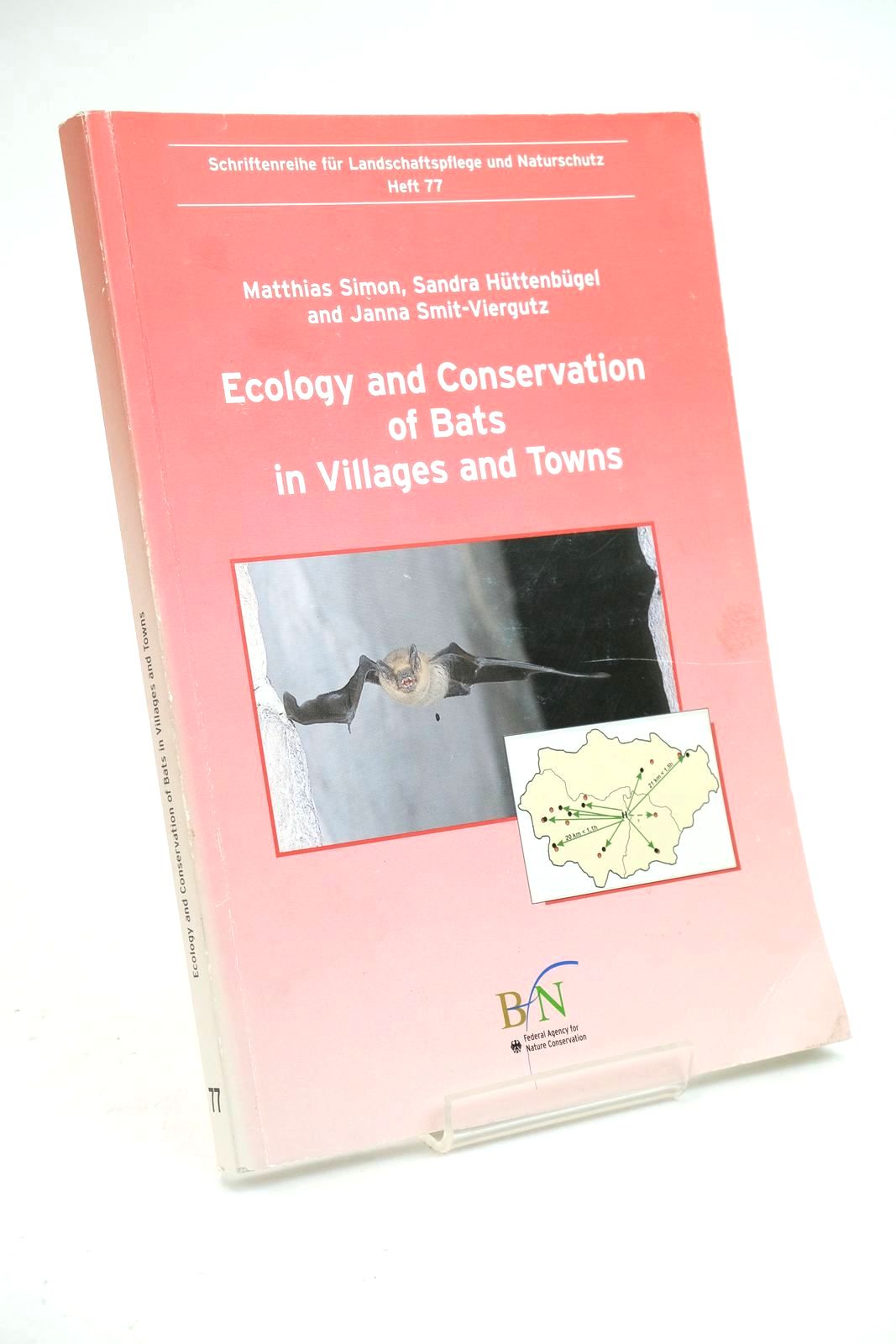
ECOLOGY AND CONSERVATION OF BATS IN VILLAGES AND TOWNS
Written by Matthias Simon, Sandra Huttenbugel, Janna Smit-Viergutz, Peter Boye.
Stock no. 1323002
1st.
2004.
Softcover.
Very good condition.
A report of the results of research around the town of Marburg. Pink cardwraps. 263 pages plus xvi. Charts, diagrams, tables and some colour photographs throughout. ISBN: 3784336191. Covers are slightly edge rubbed and grubby with some fading. Some page corner tips creased. Contents otherwise fine.
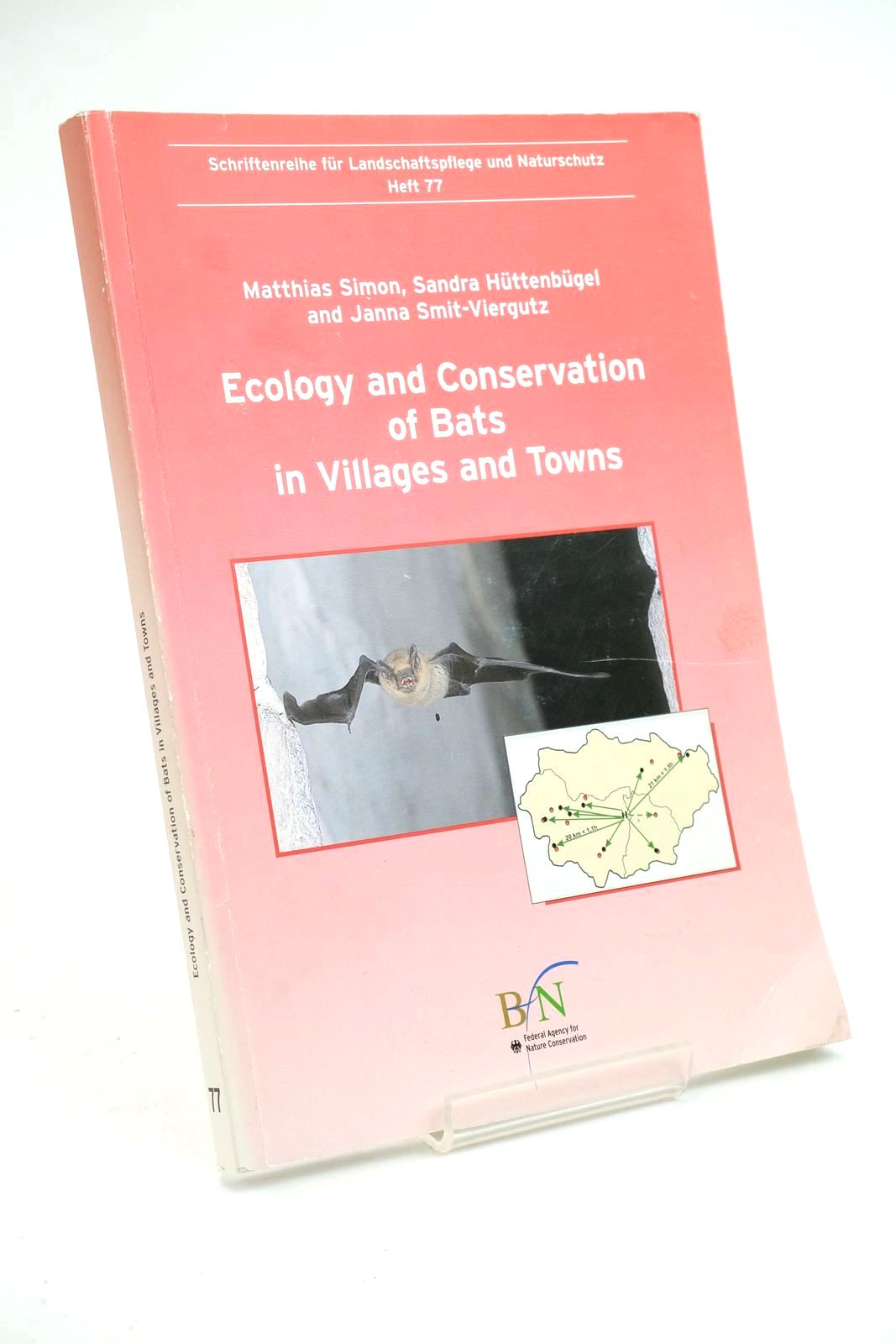
Front cover
Contents
- 1 Introduction
- 2 Area of Investigation
- 2.1 Landform of the Marburg-Biedenkopf district
- 2.2 Climate
- 2.3 Landuse
- 3 Methods - aims, description and evaluation
- 3.1 Introduction
- 3.2 Balancing of expense of the recording methods
- 4 State of the registration of bat population numbers before and after the project
- 4.1 Common pipistrelle
- 4.2 Serotine bat
- 4.3 The greater mouse eared bat
- 4.4 Natterer's bat
- 4.5 Whiskered bat
- 4.6 Common long-eared bat
- 4.7 Grey long -eared bat
- 4.8 Barbastelle bat
- 4.9 Conservation status of investigated bat species according to Red Lists
- 4.10 Summary
- 5 Requirements of summer roosts for bats
- 5.1 Introduction
- 5.2 Roost types and categories
- 5.3 Exposition
- 5.4 Roost openings
- 5.5 Location of roosts in town
- 5.6 Age of buildings
- 5.7 Upkeep condition of buildings
- 5.8 Height of buildings
- 5.9 Material of landing area
- 5.10 Roost temperatures
- 5.11 What are the features of a potential roost?
- 5.12 Summary
- 6 How do bats explore their roosts
- 6.1 Introduction
- 6.2 Swarming of the common pipistrelle at the hibernaculum
- 6.3 Spatiofunctional correlation between hibernaculum and summer roost (radio tracking)
- 6.4 Experiments in and at the hibernaculum concerning the roost locating ability of the common pipistrelle
- 6.5 Invasions
- 6.6 Swarming at the summer roost
- 6.7 Summary
- 7 Spatiofunctional relationships
- 7.1 Introduction
- 7.2 Summer roost assemblage (level 1)
- 7.3 Utilisation of foraging sites (level 2)
- 7.4 The summer move to another roost (level 3)
- 7.5 Spatial relationship between summer roost and hibernaculum (level 4)
- 7.6 Consequences for conservation
- 7.7 Summary
- 8 Population Genetics
- 8.1 Introduction
- 8.2 Basics of population genetics
- 8.3 Materials and methods
- 8.4 Results
- 8.5 Discussion
- 8.6 Summary
- 9 Roost destruction
- 9.1 Introduction
- 9.2 Roost destruction in the project area
- 9.3 Summary
- 10 How successful is the creation of new roosting opportunities?
- 10.1 Introduction
- 10.2 Description of roost offer
- 10.3 Control to determine success of newly created potential roosts
- 10.4 Final evaluation of newly created and optimised potential roosts
- 10.5 Summary
- 11 Landscape features and distributions
- 11.1 Introduction
- 11.2 Correlation between occurrence of particular bat species and specific landscape features
- 11,3 Flight routes of different bat species
- 11.4 Summary
- 12 Synopsis
- 12.1 Project goals and hypotheses
- 12.2 Evaluation of danger to bats
- 12.3 Conservation of bats in areas where they have settled
- 12.4 Improvement of database for bat conservation
- 12.5 Demands on federal, state and local government
- 13 Acknowledgements
- 14 References