

VISUAL AMENITY ASPECTS OF HIGH VOLTAGE TRANSMISSION
Written by George A. Goulty
Published by Research Studies Press
in 1989
ISBN: 0863800939
- Categorised in:
- SCIENCE AND TECHNOLOGY
- ELECTRICITY
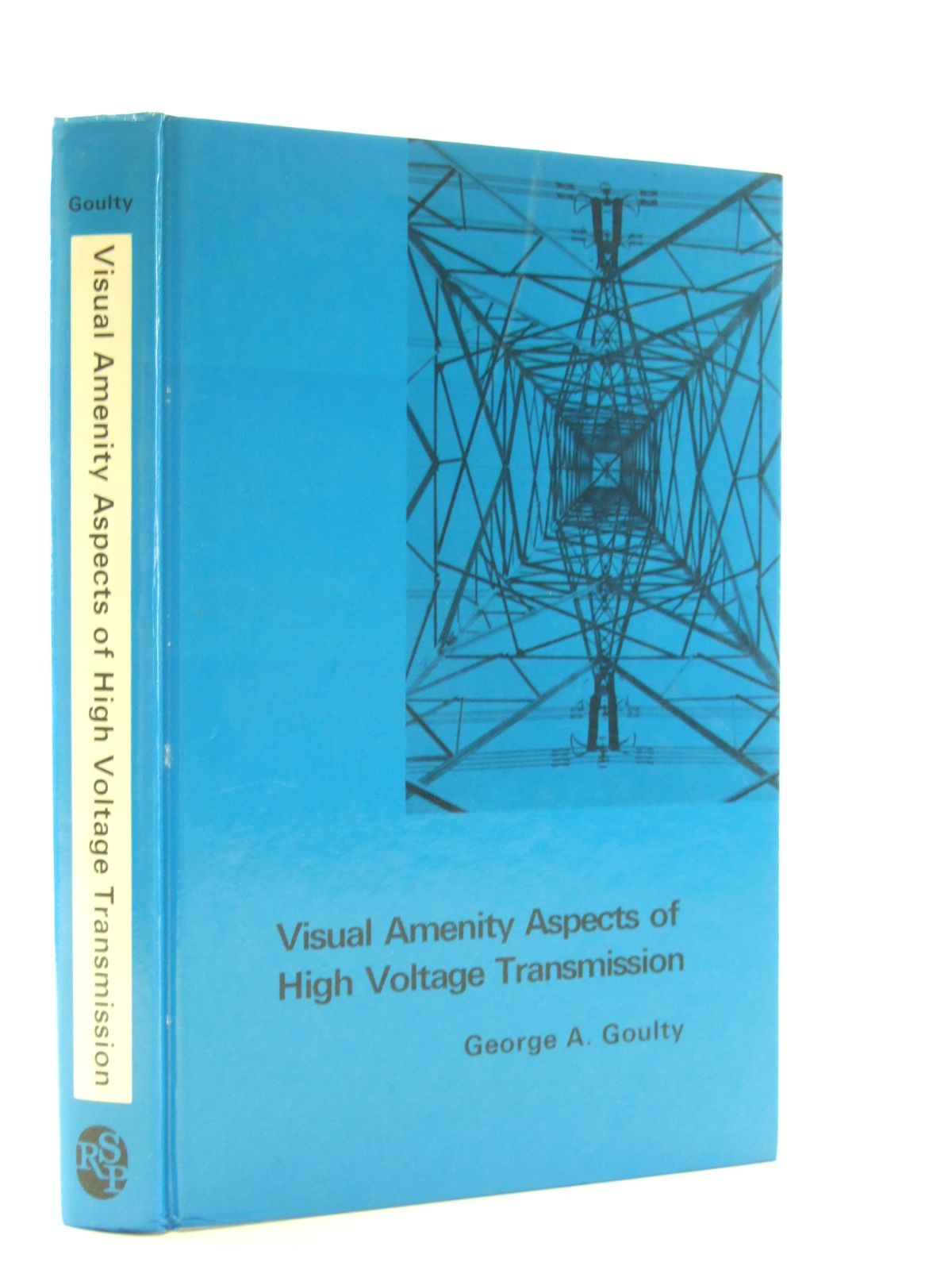
VISUAL AMENITY ASPECTS OF HIGH VOLTAGE TRANSMISSION
Written by George A. Goulty.
Stock no. 1207230
1st.
1989.
Hardback.
Fine condition.
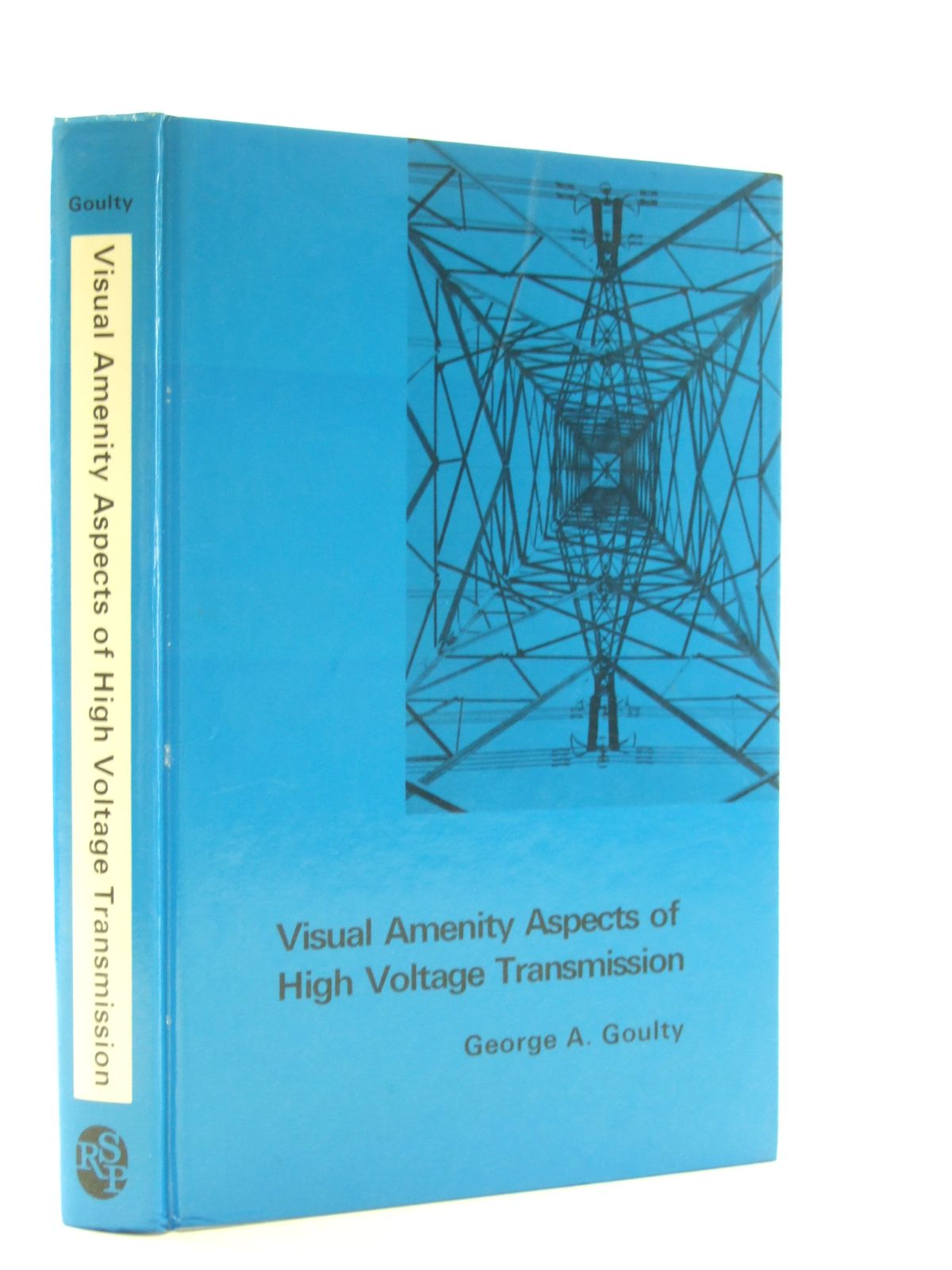
Blue glazed pictorial boards. xiii + 290 pages. B/w photos. ISBN: 0863800939. Book: name in ink to front endpaper.
Front cover
Contents
- Introduction
- PART ONE THE STATUTORY REQUIREMENT TO PRESERVE AMENITY IN THE ELECTRICITY SUPPLY INDUSTRY OF GREAT BRITAIN
- Chapter 1 The 'Amenity Clause'
- 1.1 Introduction
- 1.2 Early Hydro-Electric Developments in Scotland
- 1.3 First North Wales Hydro-Electric Power Act
- 1.4 The National Parks Commission
- 1.5 First Statutory Appointment of a Landscape Consultant
- 1.6 Second North Wales Hydro-Electric Power Act
- Chapter 2 The Industry's Present Statutory Amenity Obligation
- 2.1 Introduction
- 2.2 North of Scotland Hydro-Electric Board
- 2.3 South of Scotland Electricity Board
- 2.4 Statutory Amenity Committees
- 2.5 The Electricity Act 1957
- 2.6 Change of Emphasis from Amenity to Conservation
- 2.7 Conclusion
- PART TWO TRANSMISSION LINES
- Chapter 3 Amenity Aspects of Overhead Line Construction
- 3.1 Introduction
- 3.2 Effect on Agriculture
- 3.3 Effect on Woodlands
- 3.4 Electrical Clearance of Conductors from Trees
- 3.5 Overhead Line Insulators
- 3.6 Conductors
- 3.7 Bird Deaths from Overhead Power Lines
- Chapter 4 Aesthetics of Transmission Towers and Structures
- 4.1 Introduction
- 4.2 Present Design of Transmission Towers in the UK
- 4.3 Public Attitude to Present Tower Designs
- 4.4 Insulated Crossarms
- 4.5 Reduced Height 400 KV Transmission Tower
- 4.6 The Dreyfuss Designs
- 4.7 Towers versus Poles
- 4.8 Conclusion
- Chapter 5 Colouring of Transmission Towers
- 5.1 Introduction
- 5.2 Principles of Colouring Structures in the Landscape
- 5.3 Tower Painting Experiments by the CEGB
- 5.4 Views of the CPRE
- 5.5 Public Opinion Survey
- 5.6 Use of Weathering Steel for Towers
- 5.7 Treatments to Dull Newly Galvanized Steel Work
- 5.8 Metameric Paint
- 5.9 Conclusion
- Chapter 6 Amenity Aspects of Line Routeing
- 6.1 Consents Procedure
- 6.2 Engineering Considerations
- 6.3 Line Routeing by the CEGB
- 6.4 Ratio of Height to Span of Towers
- 6.5 Average Height of Towers
- 6.6 Public Attitude to Transmission Lines
- 6.7 Landscaping a Line
- 6.8 Environmental Impact Analysis
- PART THREE UNDERGROUND CABLES
- Chapter 7 400 kV Cable Schemes in England and Wales
- 7.1 Introduction
- 7.2 Glaslyn Estuary
- 7.3 Goring Gap
- 7.4 Oxford
- 7.5 Woodhead Tunnel
- 7.6 River Wye
- 7.7 Southampton Water Tunnel
- 7.8 Severn Tunnel
- 7.9 Thames Tunnel
- 7.10 Medway Tunnel
- 7.11 Lynher River
- 7.12 Croydon
- 7.13 Dinorwig
- Chaper 8 Policy of the CEGB and Public Attitude to Undergrounding High Voltage Transmission Lines
- 8.1 Introduction
- 8.2 Evolution of CEGB Policy on High Voltage Cabling
- 8.3 Testing of Cable Schemes Against CEGB Policy
- 8.4 Public Attitude to High Voltage Undergrounding
- 8.5 Superconducting Cable
- 8.6 Conclusion
- PART FOUR SUBSTATIONS
- Chapter 9 Siting and Design
- 9.1 Introduction
- 9.2 Siting Criteria
- 9.3 Land Acquisition
- 9.4 Undergrounding Line Entries
- 9.5 Substation Structures
- 9.6 Substation Enclosures
- 9.7 Metalclad Substations
- 9.8 Underground Substations
- Chapter 10 Landscaping and Substations
- 10.1 Introduction
- 10.2 Landscaping as a Planning Requirement
- 10.3 Landscaping Objectives
- 10.4 Ground Modelling
- POSTSCRIPT The Amenity Obligation of the Privatised UK Electricity Supply Industry
- APPENDIX
- INDEX