

DEMOCRACY IN AMERICA
Written by Alexis De Tocqueville, Harvey C. Mansfield, Delba Winthrop
Published by Folio Society
in 2002
- Categorised in:
- FOLIO SOCIETY
- HISTORY
- HISTORY (AMERICAN)
- USA
 View more images
DEMOCRACY IN AMERICA
Written by Alexis De Tocqueville, Harvey C. Mansfield, Delba Winthrop.
Stock no. 1830516
1st thus.
2002.
Hardback.
Very good condition.
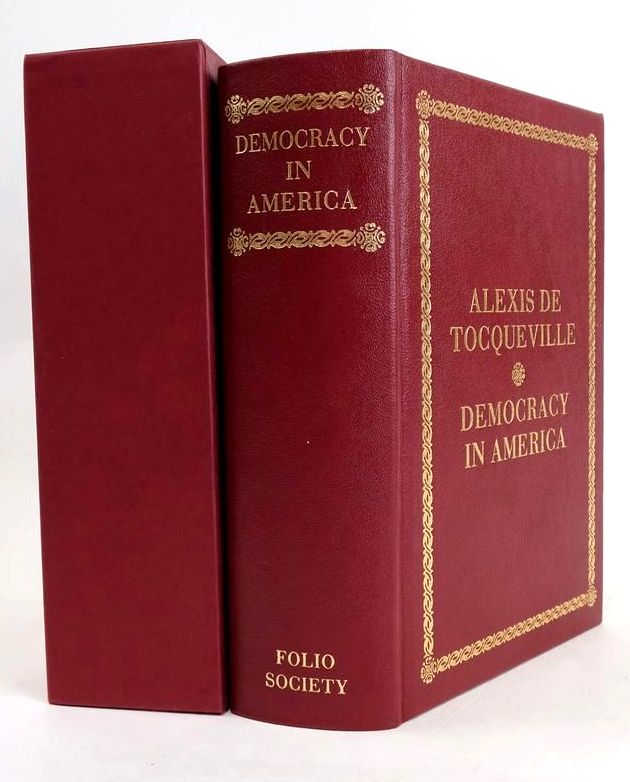
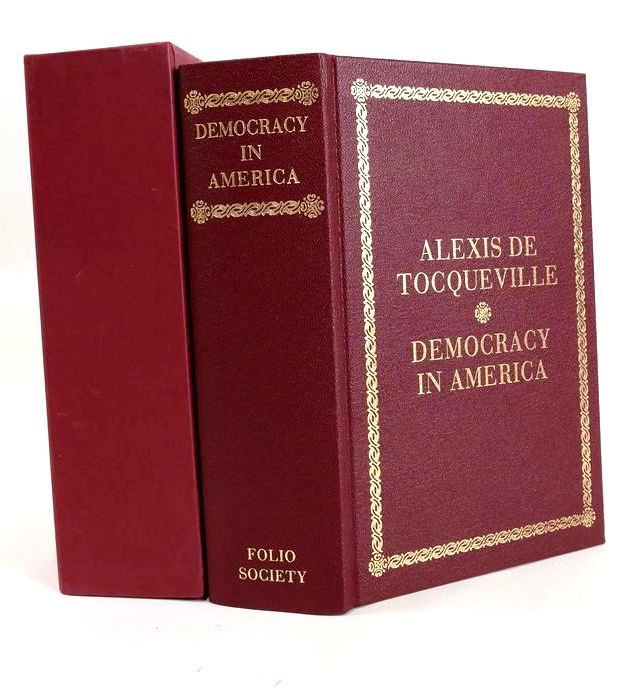
A classic study of the American republic. Translated, edited, and with an introduction by Harvey C. Mansfield and Delba Winthrop. Red cloth, gilt titles. Top edge red. Colour maps to endpapers. xcix and 722 pages including index. Couple of brown spots to vertical edge of text block. Headband to top of spine is unglued from the outer spine. Else a lovely copy. Contained in publisher's slipcase which is lightly scuffed.
Front cover
Contents
- PREFACE
- EDITOR'S INTRODUCTION
- SUGGESTED READINGS
- A NOTE ON THE TRANSLATION
- Volume One
- INTRODUCTION
- PART ONE
- 1 External Configuration of North America
- 2 On the Point of Departure and Its Importance for the Future of the Anglo-Americans
- 3 Social State of the Anglo-Americans
- 4 On the Principle of the Sovereignty of the People in America
- 5 Necessity of Studying What Takes Place in the Particular States before Speaking of the Government of the Union
- 6 On Judicial Power in the United States and Its Action on Political Society
- 7 On Political Judgement in the United States
- 8 On the Federal Constitution
- PART TWO
- 1 how One can Say Strictly That in the United States the People Govern
- 2 On Parties in the United States
- 3 On Freedom of the Press in the United States
- 4 On Political Association in the United States
- 5 On the Government of Democracy in America
- 6 What are the Real Advantages That American Society Derives from the Government of Democracy
- 7 On the Omnipotence of the Majority in the United States and Its Effects
- 8 On What Tempers the Tyranny of the Majority in the United States
- 9 On the Principal Causes Tending to Maintain a Democratic Republic in the United States
- 10 Some Consideration on the Present State and the Probable Future of the Three Races that Inhabit the Territory of the United States
- Volume Two
- NOTICE
- PART ONE
- INFLUENCE OF DEMOCRACY ON INTELLECTUAL MOVEMENT IN THE UNITED STATES
- 1 On the Philosophic Method of the Americans
- 2 On the Principal Source of Beliefs among Democratic Peoples
- 3 Why the Americans Show More Aptitude and Taste for General Ideas than Their English Fathers
- 4 Why the Americans Have Never Been as Passionate as the French for General Ideas in Political Matters
- 5 How, in the United States, Religion Knows How to Make Use of Democratic Instincts
- 6 On the Progress of Catholicism in the United States
- 7 What Makes the Mind of Democratic Peoples Lean toward Pantheism
- 8 How Equality Suggests to the Americans the Idea of the Indefinite Perfectibility of Man
- 9 How the Example of the Americans does not Prove that a Democratic People can have no Aptitude and Taste for the Sciences, Literature, and the Arts
- 10 Why the Americans apply Themselves to the Practice of the Sciences rather than to the Theory
- 11 In What Spirit the Americans Cultivate the Arts
- 12 Why the Americans at the Same Time Raise Such Little and Such Great Monuments
- 13 The Literary Face of Democratic Centuries
- 14 On the Literary Industry
- 15 Why the Study of Greek and Latin Literature is Particularly Useful in Democratic Societies
- 16 How American Democracy has Modified the English Language
- 17 On Some Sources of Poetry in Democratic Nations
- 18 Why American Writers and Orators are Often Bombastic
- 19 Some Observations on the Theater of Democratic Peoples
- 20 On Some Tendancies Particular to Historians in Democratic Centuries
- 21 On Parliamentary Eloquence in the United States
- PART TWO
- INFLUENCE OF DEMOCRACY ON THE SENTIMENTS OF THE AMERICANS
- 1 Why Democratic Peoples Show a More Ardent and More Lasting Love for Equality than for Freedom
- 2 On Individualism in Democratic Countries
- 3 How Individualism in Greater at the End of a Democratic Revolution than in Any Other Period
- 4 How the Americans Combat Individualism with Free Institutions
- 5 On the Use That the Americans Make of Association in Civil Life
- 6 On the Relation between Associations and Newspapers
- 7 Relations between Civil Associations and Political Associations
- 8 How the Americans Combat Individualism by the Doctrine of Self-Interest Well Understood
- 9 How the Americans Apply the Doctrine of Self-Interest Well Understood in the Matter of Religion
- 10 On the Taste for Material Well-being in America
- 11 On the Particular Effects That the Love of Material Enjoyments Produces in Democratic Centuries
- 12 Why Certain Americans Display such an Exalted Spiritualism
- 13 Why the Americans Show themselves so restive in the Midst of their Well-Being
- 14 How the Taste for Material Enjoyments among Americans is United with Love of Freedom and with Care for Public Affairs
- 15 How Religious Beliefs at Times turn the Souls of the Americans toward Immaterial Enjoyments
- 16 How the Excessive Love of Well being can be harmful to Wellbeing
- 17 How in Times of Equality and doubt it is important to move back the object of human actions.
- 18 Why among the Americans all Hones Professions are Reputed Honorable
- 19 What Makes Almost All Americans incline towards Industrial Professions
- 20 How Aristocracy Could issue from Industry
- PART THREE
- INFLUENCE OF DEMOCRACY ON MORES PROPERLY SO-CALLED
- 1 How Mores Become Milder as Conditions are Equalized
- 2 How Democracy Renders the Habitual Relations of the Americans Simpler and Easier
- 3 Why the Americans Have So Little Oversensitivity in their Country and Show themselves to be so oversensitive i Ouyrs
- 4 Consequences of the Preceding Three Chapters
- 5 How Democracy Modifies the Relations of Servant and Master
- 6 How Democratic Institutions and Mores Tend to Raise the Price and Shorten the Duration of LEases
- 7 Influence of Democracy on Wages
- 8 Influence of Democracy on the Family
- 9 Education of Girls in the United States
- 10 How the Girl Is Found beneath the features of the Wife
- 11 How equality of conditions contributes to maintaining good Mores in America
- 12 How the Americans understand the equality of Man and Woman
- 13 How equality naturally divides the Americans into a multitude of Particular Little Societies
- 14 Some Reflections on American Manners
- 15 On the Gravity of the Americans and Why it does not prevent their often doing-ill considered Things
- 16 Why the National vanity of the Americans is More Restive and more Quarrelsome than that of the English
- 17 How the Aspect of society in the United States is at once agitated and monotonous
- 18 On Honor in the United States and in Democratic Societies
- 19 Why one finds to many ambitious men in the United States and so few great Ambitions
- 20 On the Industry in place-hunting in certain democratic nations
- 21 Why great revolutions will become rare
- 22 Why democratic peoples naturally desire peace and democratic armies naturally war
- 23 Which is the most warlike and the most revolutionary class in democratic armies
- 24 What makes democratic armies weaker than other armies when entering into a campaign and more formidable when war is prolonged
- 25 On discipline in Democratic armies
- 26 Some considerations on War in democratic societies
- PART FOUR
- ON THE INFLUENCE THAT DEMOCRATIC IDEAS AND SENTIMENTS EXERT ON POLITICAL SOCIETY
- 1 Equality Naturally gives men the taste for free institutions
- 2 That the Ideas Democratic peoples in the matter of Government are naturally favourable to the concentration of powers
- 3 That the sentiments of democratic peoples are in accord with their ideas to bring them to concentrate power
- 4 On some particular and accidental causes that service to bring a democratic people to centralise power or turn it away from that
- 5 That among European nations of our day sovereign power increases although sovereigns are less stable
- 6 What kind of despotism democratic nations have to fear
- 7 Continuation of the preceding chapters
- 8 General view of subject
- NOTES
- SOURCES CITED BY TOCQUEVILLE
- INDEX